
Review · NEW ZEALAND
Auckland: Whale and Dolphin Watching Half-Day Eco Cruise
The best part of this Auckland cruise is that the wildlife search begins almost at once. From the 65-foot Dolphin Explorer, you pass Devonport and Rangitoto Island before reaching the Hauraki Gulf, where dolphins, whales, gannets, penguins, and even sharks may appear. I like the small enough boat for clear views and the fact that the crew combines wildlife watching with real marine research.
I also like the free second cruise if no marine mammals appear, which takes some pressure off nature’s unpredictability. The drawback is simple: you can spend 4.5 hours at sea and miss whales entirely. The Gulf is wild, not a wildlife park, and rough weather can make the ride chilly or uncomfortable.
Key points to know before you sail
- Research vessel as well as sightseeing boat: The crew may collect plankton or other samples and explain how marine scientists track animals.
- Wildlife is never guaranteed: Dolphins are often the main event, while whales may be distant or absent.
- Excellent Auckland location: Check in at Berth 9, Eastern Viaduct Marina, opposite the Maritime Museum.
- Rangitoto and Devonport views: The opening part of the cruise gives you a fine water-level look at Auckland’s harbor and volcanic setting.
- Free second chance: If you see no marine mammals, you can take the cruise again without paying for another ticket.
- Bring proper clothing: Warm layers, a showerproof jacket, sunscreen, a hat, and seasickness medication are sensible additions.
Setting out from Auckland’s Eastern Viaduct
I like how little time you lose getting to this cruise. The boat leaves from Berth 9 at Eastern Viaduct Marina, opposite the Maritime Museum, with the boarding ramp at the end of Quay Street heading west. This is central Auckland, so you can fit the trip into a sightseeing day without arranging a long transfer.
You need to arrive 30 minutes before departure. Check-in closes 15 minutes before the scheduled sailing, so arriving late is a poor gamble. The cruise lasts 270 minutes, or four and a half hours, which makes it a major half-day activity rather than a quick harbor ride.
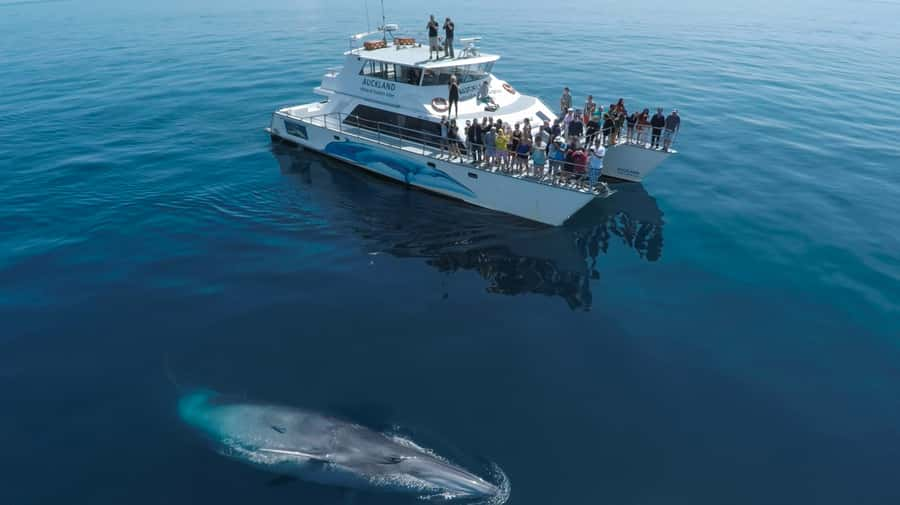
The Dolphin Explorer is a 65-foot luxury catamaran. That size gives you more room than a small speedboat and a steadier platform for watching animals, though the vessel is still exposed to wind and swell. You can sit or move around to find a good viewing angle, and the boat is described by several passengers as comfortable and not overly crowded.
Do not treat the word luxury as a promise of a quiet lounge-style outing. You are going outdoors to look for wild animals. The boat has seating, but you should expect spray, wind, engine noise, and the need to move outside when an animal is spotted.
More Whale Watching Cruises in New Zealand:
- Auckland: Tikapa Moana Whales, Dolphins and Islands Cruise
★ 3.9 · 292 reviews - Tenerife: Eco-Yacht Whale and Dolphin Watching and Swimming
★ 4.7 · 15,619 reviews - Los Cristianos Respectful No-Chase Whale and Dolphin Safari
★ 4.6 · 12,782 reviews
Devonport, Rangitoto, and the first views
The opening run gives you a pleasant orientation to Auckland from the water. You pass North Head and Devonport, then head toward Rangitoto Island and the wider Hauraki Gulf. These views are more than scenery between sightings. They help you understand Auckland as a harbor city shaped by islands, volcanic cones, and open sea.
Rangitoto is especially striking from the water. Its dark volcanic form gives the cruise a strong sense of place before the wildlife search moves farther offshore. I would keep your camera ready during this early stretch, even if you are mainly hoping for dolphins.
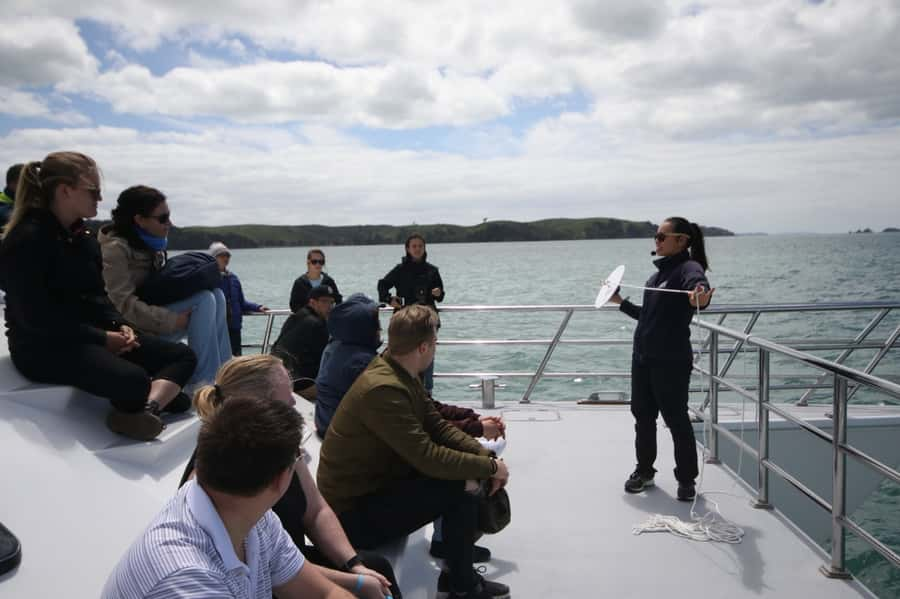
The crew uses this time to explain the area and the animals you may encounter. Guides and marine scientists such as Emily, Sanaa, Toni, John, Jess, and Jo have been singled out during different sailings for clear explanations and friendly service. The exact team changes, but the format remains focused on practical wildlife information rather than a nonstop sales pitch.
This is also when you should settle into the rhythm of the trip. Keep scanning the water, listen for updates, and ask questions. You may not see an animal immediately, and the crew needs time to search a large marine park.
How the wildlife search works
The Hauraki Gulf is not a controlled viewing area. The skipper and research crew look for signs of marine life, including groups of seabirds feeding over fish. These feeding groups can help point the boat toward dolphins or whales, a process some passengers found particularly interesting.
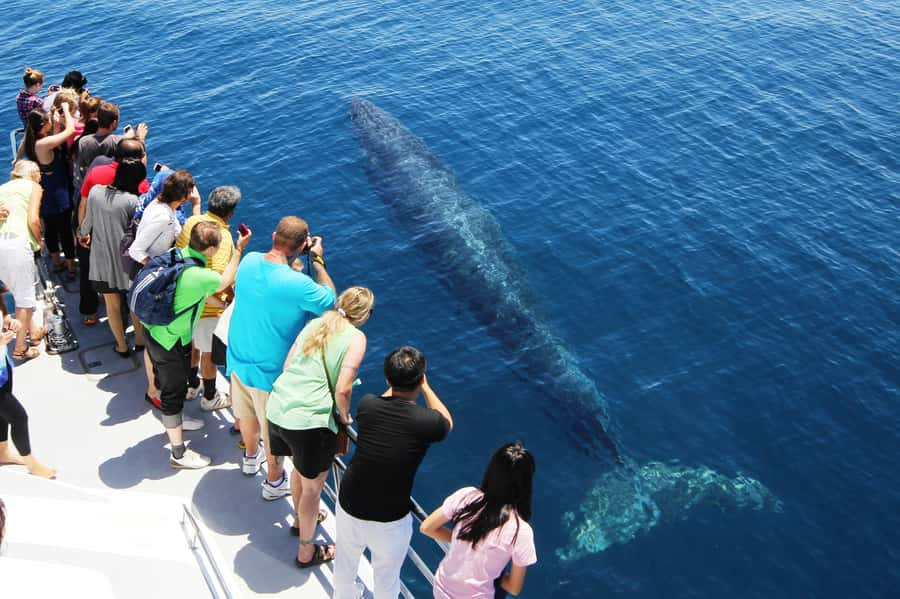
The animal list includes orcas and bottlenose dolphins, as well as common dolphins, Bryde’s whales, seabirds, blue penguins, and gannets. Sightings have also included sharks, including a blue shark and a hammerhead shark. You should treat these as possible encounters, not promised features of every departure.
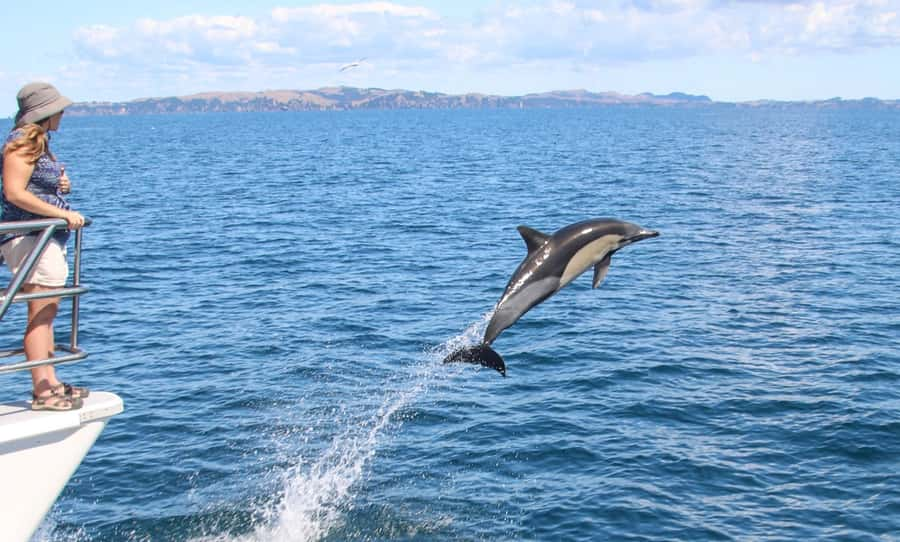
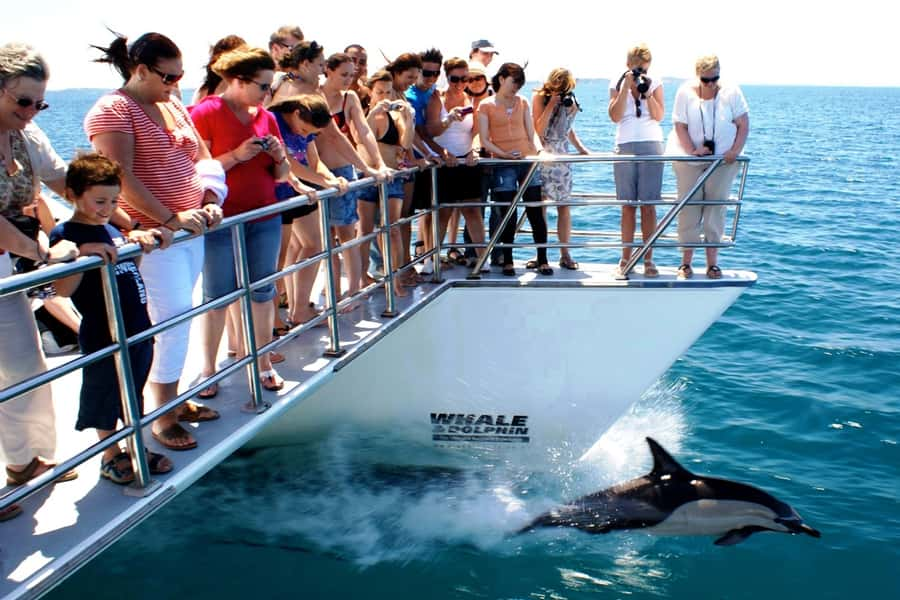
Dolphins are often the most reliable reward. Some trips have produced several pods, with animals swimming close to or beneath the catamaran. One outing recorded more than 100 dolphins, while another spent about 30 minutes watching a pod. If you see young dolphins traveling with the group, the encounter can feel especially memorable.
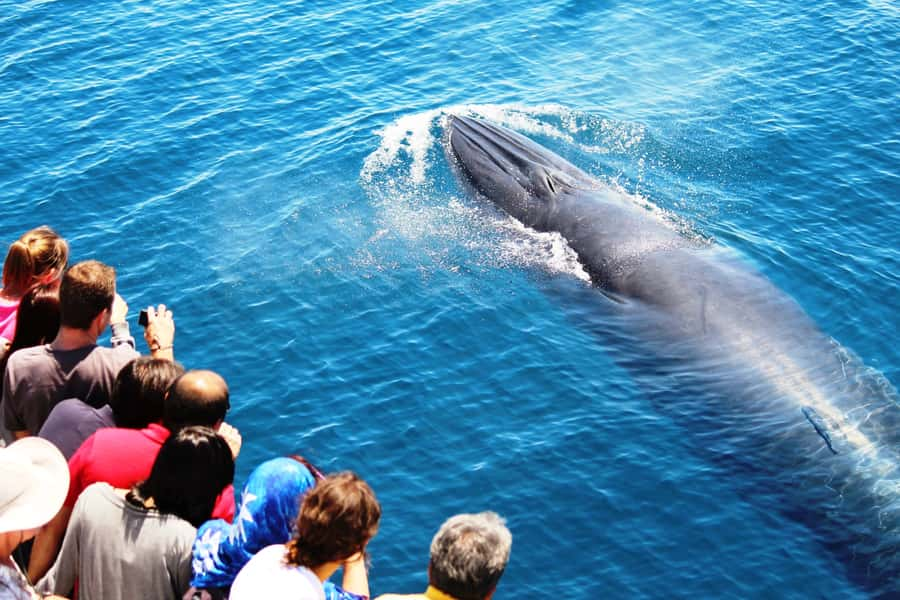
Whales are less predictable. You might see Bryde’s whales close enough for a good look, or several whales only in the distance. On another trip, there may be no whale at all. The free repeat cruise helps, but it cannot change the basic fact that animals move where they choose.
The crew appears careful about viewing distances. You may get close enough for a strong sighting, but the aim is not to chase or crowd the animals. That matters to me. A good wildlife cruise gives you a clear look while leaving the animals room to behave naturally.
The birds are part of the main event
Do not focus so tightly on whales that you ignore the birds. Australasian gannets can drop toward the sea at speed, and large feeding groups can create some of the most active scenes of the day. Shearwaters and blue penguins have also been seen.
The gannets are useful markers as well as impressive subjects for photographs. A patch of busy seabirds may indicate fish below, which can bring dolphins or whales into the area. The crew can connect these details for you, turning a simple bird sighting into a lesson about how the Gulf works.
Bring binoculars if you have them. They are particularly useful when whales remain far off or when birds are scattered across the water. A camera with a zoom lens helps too, but do not spend the whole cruise looking through it. The animals can surface once and vanish before you frame the shot.
More Dolphin Watching Boat Trips in New Zealand:
- Paihia/Russell: Hole in the Rock, Dolphins & Island Cruise
★ 4.6 · 821 reviews - Akaroa: Dolphin Nature Cruise
★ 4.9 · 440 reviews - From Funchal: Ecological Catamaran Dolphin Whale Watching
★ 4.5 · 8,204 reviews - Albufeira: Benagil Caves & Dolphin Watching Speed Boat Tour
★ 4.6 · 6,316 reviews
A working marine research trip
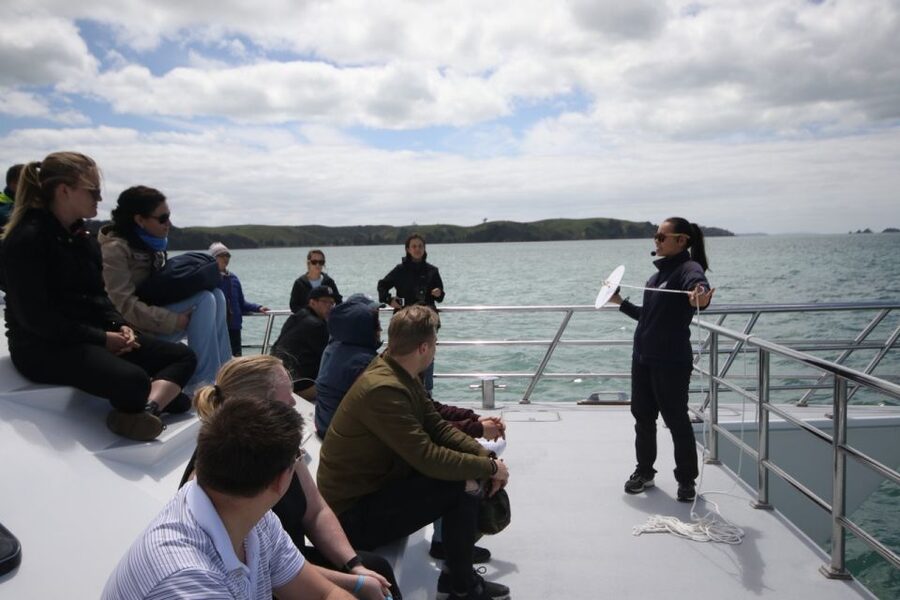
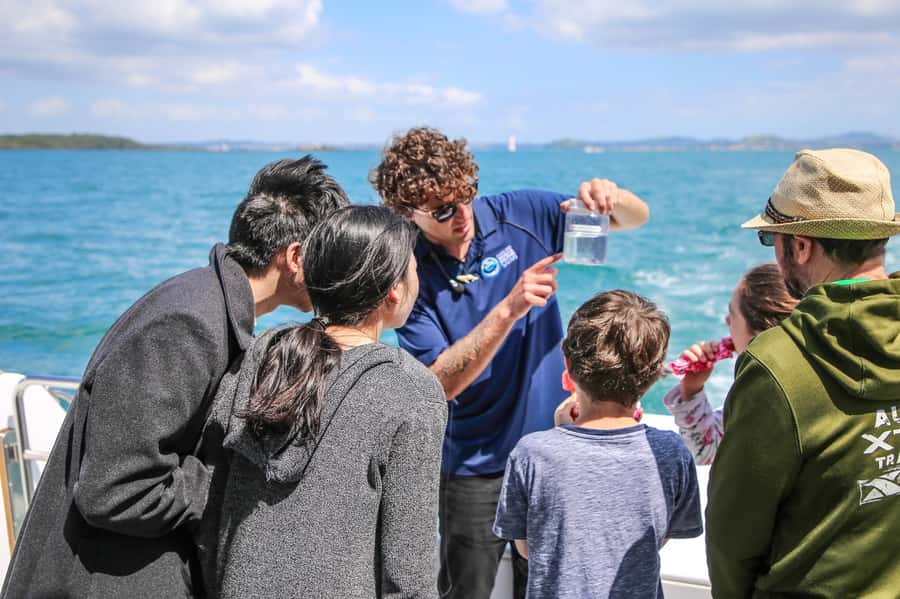
The most distinctive feature of this cruise is its link to science. The Dolphin Explorer is used as a research vessel, and the crew may pause to collect samples or carry out work connected with marine life. Plankton research has been explained during the trip, and the guides may discuss how scientists track mammals by watching feeding activity and other signs.
This gives the excursion more substance than a simple sightseeing ride. You are not only waiting for a fin to appear. You are learning about the small organisms, fish, birds, and mammals that form one connected system.
The conservation contribution is also clear. One dollar from every ticket goes to the Hauraki Gulf Guardians fund. That is not a reason to overlook the price or the chance of poor sightings, but it does add value if you want your activity spending to support local protection work.
I would ask questions. The crew is there to explain the animals, the geography, and the research. Some guides have been praised for their enthusiasm and for making the science easy to follow. The information can be especially useful for families and anyone who wants more than a quick photograph.
Comfort, weather, and seasickness
A catamaran is a sensible choice for this kind of trip, but no boat removes the motion of the sea. Wind and swell can change the feel of the cruise quickly. Weather warnings have led the operator to offer a refund or rebooking, and the skipper can cancel a departure if wind, weather, or sea conditions make it unsafe.
Wear warm clothes even on a sunny Auckland day. Add a showerproof jacket, hat, sunscreen, and any personal medication you need. The open viewing areas are where you will want to be, and that means you will feel the weather.
If you are prone to seasickness, take your medication before the trip, as advised. Do not wait until you feel unwell. A rough ride can distract you from the wildlife and make the four-and-a-half-hour duration feel long.
Food and drinks are not included, but a small selection of snacks, hot food, and drinks can be bought onboard. Beer and wine are available too. I would still bring a sensible plan for eating before departure, since the onboard range is described as small rather than a full café menu.
The vessel is not wheelchair accessible because of stairs and narrow doorways. Children under five can join only with close supervision from a parent or guardian, and unaccompanied minors are not allowed. The activity is also not suitable for heavily pregnant women.
Is the $130 price fair?
At $130 per person, this is not the cheapest way to spend a morning or afternoon in Auckland. You are paying for a long boat trip, a specialized vessel, an experienced crew, marine interpretation, and the chance to see animals in open water. You are not paying for a guaranteed whale encounter.
The value improves if you care about the research and conservation work. The second-cruise promise also matters. If no marine mammals appear, you can return for another sailing rather than simply accepting an empty wildlife log.
The price feels strongest for people who want the full experience: harbor scenery, birds, marine science, and a serious attempt to locate dolphins or whales. It feels weaker if your only goal is a close whale photograph and your schedule cannot accommodate a repeat trip.
I also think the four-and-a-half-hour length is important. A shorter trip might cost less, but it would give the crew less time to search. The long outing gives you a better chance of finding moving wildlife, though it requires patience.
Who will enjoy this cruise most?
I would recommend it to adults, older children, photographers, birdwatchers, and anyone interested in marine conservation. It works well as a centerpiece for an Auckland visit because you start in the city and quickly reach open water.
Families should think about the length and the weather. Young children may find four and a half hours difficult if sightings are slow, and loud excitement onboard can make commentary harder to hear. The boat has seating, but this is still an active wildlife search, not a passive harbor ferry.
It is also a good fit for visitors who have already seen animals in aquariums and want a natural setting instead. You cannot control what appears, but that uncertainty is part of the point. The most rewarding trips seem to combine patience, good sea conditions, and a crew that keeps you interested during quiet stretches.
If your schedule is tight, check the sailing time carefully and protect the whole half-day. The cruise does not include hotel transport, and you need to reach the marina early for check-in.
My practical verdict
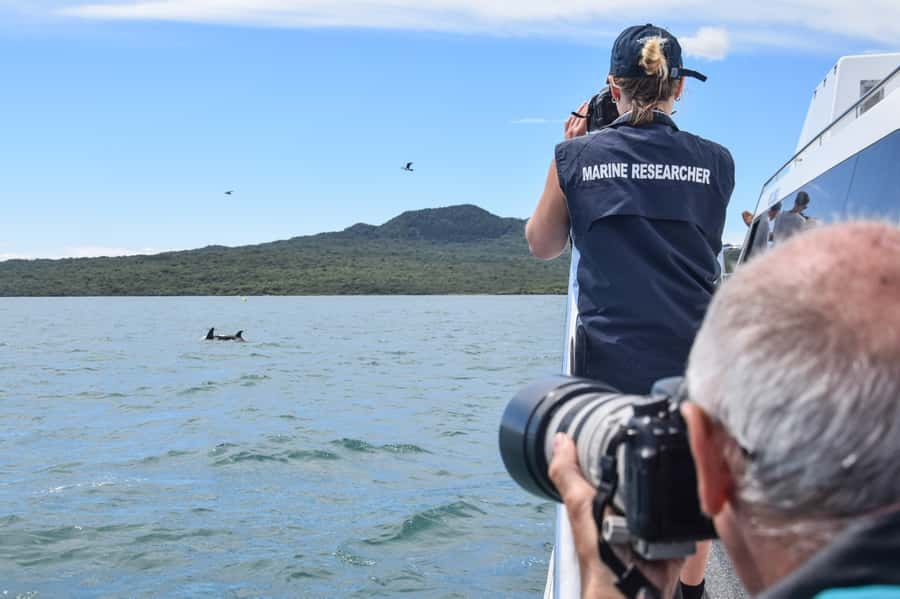
I like this Auckland cruise because it connects three things that do not always come together: easy city access, serious wildlife watching, and marine research. The crew’s work with plankton, animal tracking, and conservation gives the trip a clear purpose beyond taking pictures.
You should book it if you can accept uncertainty and want a thoughtful day on the Gulf. You should skip it if you need a guaranteed whale sighting, dislike open-water motion, or cannot spare four and a half hours.
For the best chance of a satisfying outing, arrive early, dress warmer than you think necessary, take seasickness medication in advance if you need it, and bring binoculars. Most of all, judge the trip by the whole experience. Dolphins may race the boat, gannets may signal feeding activity, or the crew may explain the Gulf while the water stays empty. That is the honest bargain of wildlife watching, and the free return trip makes this one easier to accept.
FAQ
Where does the Auckland whale and dolphin cruise depart from?
The boat leaves from Berth 9 at Eastern Viaduct Marina, opposite the Maritime Museum. The marina is accessed from the end of Quay Street heading west.
How early should I arrive?
You should arrive 30 minutes before departure to check in with the crew at the top of the boarding ramp. Check-in closes 15 minutes before the scheduled departure time.
How long does the cruise last?
The eco-cruise lasts 270 minutes, or four and a half hours.
What animals might I see?
Possible sightings include orcas, bottlenose dolphins, common dolphins, Bryde’s whales, gannets, shearwaters, blue penguins, and other seabirds. Sharks have also been seen, but no animal sighting is guaranteed.
What happens if no marine mammals appear?
You can take the cruise again for free if you do not see any marine mammals.
What should I wear and bring?
Bring warm clothes, a showerproof jacket, a sun hat, sunscreen, a camera, binoculars, personal medication if needed, and seasickness medication. Seasickness medication should be taken before the trip.
Is food available onboard?
Food and drinks are not included, but a small selection of snacks, hot food, and drinks can be purchased onboard. Beer and wine are also available.
Is the boat wheelchair accessible?
No. The vessel has stairs and narrow doorways, so it is not wheelchair accessible.
More Half-Day Boat Trips in New Zealand
- Palma de Mallorca: Half-Day Catamaran Tour with Buffet Meal
★ 4.5 · 3,190 reviews - Half-Day Exclusive Catamaran Cruise in Santorini with Meal and Open Bar
★ 5.0 · 2,975 reviews - From Venice: Murano and Burano Half-Day Island Tour by Boat
★ 4.6 · 2,489 reviews - From Phi Phi: Half-Day Longtail Boat Tour with Snorkeling
★ 4.2 · 1,733 reviews
Just added on the water around New Zealand
- From Paihia: Scenic Cruise with Roberton Island Stopover★ 4.8 · 332 reviews
- From Te Anau: Doubtful Sound Coach & Cruise★ 4.7 · 335 reviews
- From Queenstown Milford Sound Cruise & Glass-Roof Coach Tour★ 4.6 · 545 reviews
- From Queenstown: Milford Sound Cruise and Coach Day Tour★ 4.7 · 1,681 reviews
- From Queenstown: Skippers Canyon Jet Boat Ride★ 4.9 · 699 reviews
- Bay of Islands: Discover the Bay Cruise with Island Lunch★ 4.6 · 265 reviews
- Bay of Islands: 4.5 Hour Day Cruise and Island Getaway Tour★ 4.8 · 283 reviews
- Auckland: Harbour Sailing Cruise with 3-Course Dinner★ 4.5 · 319 reviews
Whale Watching Cruises, side by side.
Tenerife: Eco-Yacht Whale and Dolphin Watching and Swimming
Read our review →
Los Cristianos Respectful No-Chase Whale and Dolphin Safari
Read our review →
Reykjavík: Whale Watching and Marine Life Cruise
Read our review →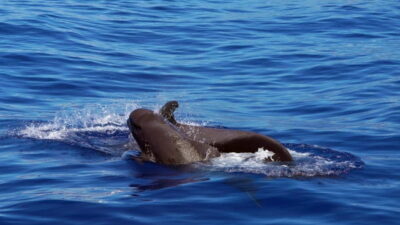
From Funchal: Ecological Catamaran Dolphin Whale Watching
Read our review →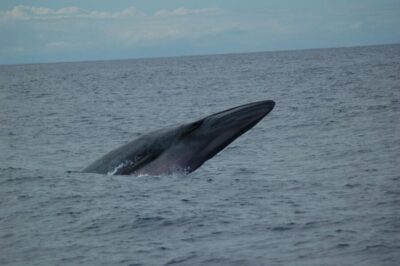
Funchal: Dolphin and Whale Watching Catamaran Cruise
Read our review →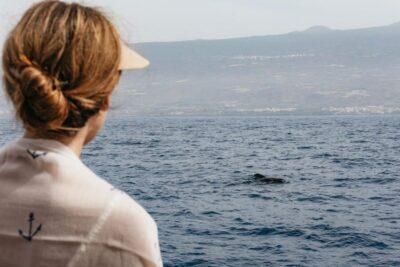
Costa Adeje: Whale & Dolphin Eco-Cruise with Snacks & Drinks
Read our review →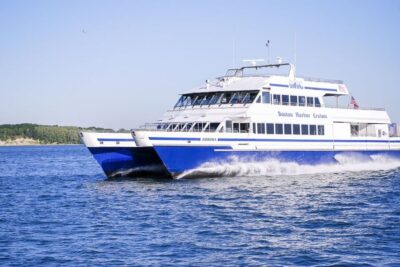
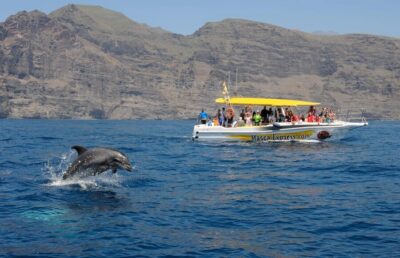
Los Gigantes: Dolphin & Whale Watching Cruise with Swim Stop
Read our review →Other lists this boat trip sits in