
Review · IRELAND
Dublin: River Liffey Sightseeing Cruise
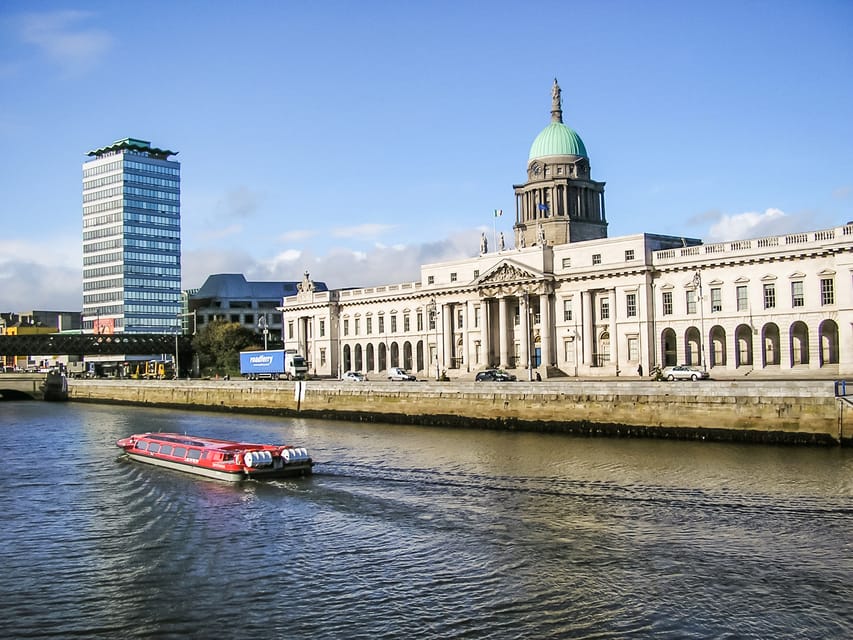
Dublin’s story makes best sense from the River Liffey, where Vikings, Georgian planners, port workers, canal builders, and modern developers all left their mark. This 45-minute cruise gives you a useful city orientation while passing the Ha’penny Bridge, Custom House, the Jeanie Johnston, Docklands, and the point where the river meets Dublin Bay.
I like the lively local commentary, which turns a short boat ride into a compact history lesson, and I like the all-weather 48-passenger boat, a sensible choice in a city where sunshine is never guaranteed. The main drawback is the short length: with so much to cover, the cruise can feel over quickly, and loud passengers may make the guide harder to hear.
Key Points Before You Book
- Viking history to modern Docklands: The commentary follows Dublin’s growth from its Viking beginnings through Georgian expansion, decline, and waterfront renewal.
- A useful view of major landmarks: You pass the Ha’penny Bridge, Custom House, Jeanie Johnston, historic neighborhoods, and the port from a fresh angle.
- Friendly guides make the trip: Guides including Gerry, Jerry, Tony, Peter, and Lucy are praised for clear stories, humor, and strong local character.
- A 48-passenger all-weather boat: The vessel is compact enough for a personal feel while offering shelter when Dublin weather turns wet.
- Only 45 minutes: It is an easy addition to a busy sightseeing day, though you should not expect a full cruise around Dublin Bay.
- Tides can affect the route: The exact sailing is subject to water conditions, and the crew may adjust what the boat can reach.
Dublin Makes More Sense From the Liffey
The Liffey is not just a pleasant waterway cutting through the city. It is the thread that ties Dublin together. From the boat, you can see how the river shaped trade, bridges, roads, canals, public buildings, and the modern business district.
I find this especially useful early in a visit. Walking Dublin’s streets, you can easily treat the river as a line to cross on the way to somewhere else. From the water, the city opens up. Buildings that seem separate on foot become part of one connected story.
The guide covers more than a list of sights. You hear about Dublin’s Viking beginnings, its swift growth in the 18th and 19th centuries, its later decline, and the redevelopment of the Docklands. That range gives the cruise some substance. You are not simply looking at bridges and office buildings. You are learning why they are there.
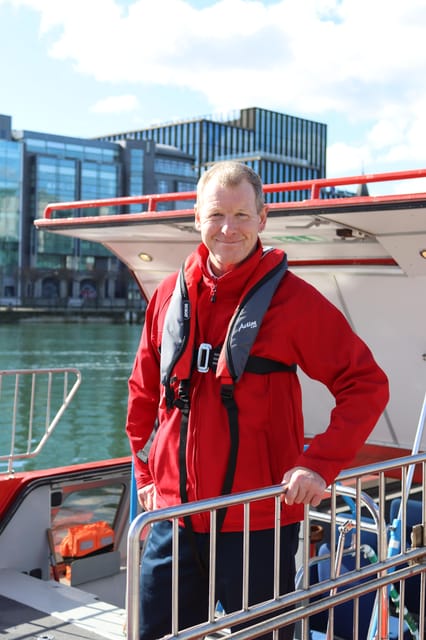
The strongest part is the human delivery. The guides are not presented as formal lecturers. Their style is more conversational, with jokes, local stories, urban myths, and personal enthusiasm. Gerry, Jerry, Tony, Peter, and Lucy are among the guides praised for making the history easy to follow. The exact guide depends on your sailing, but you can expect English commentary from a local member of the crew.
More River Cruises in the world:
- Paris: 1-Hour Seine Cruise departing from the Eiffel Tower
★ 4.4 · 77,472 reviews - London: Westminster to Greenwich River Thames Cruise
★ 4.5 · 22,836 reviews - Paris: Evening River Cruise with Music
★ 4.4 · 22,721 reviews
Boarding at Custom House Quay
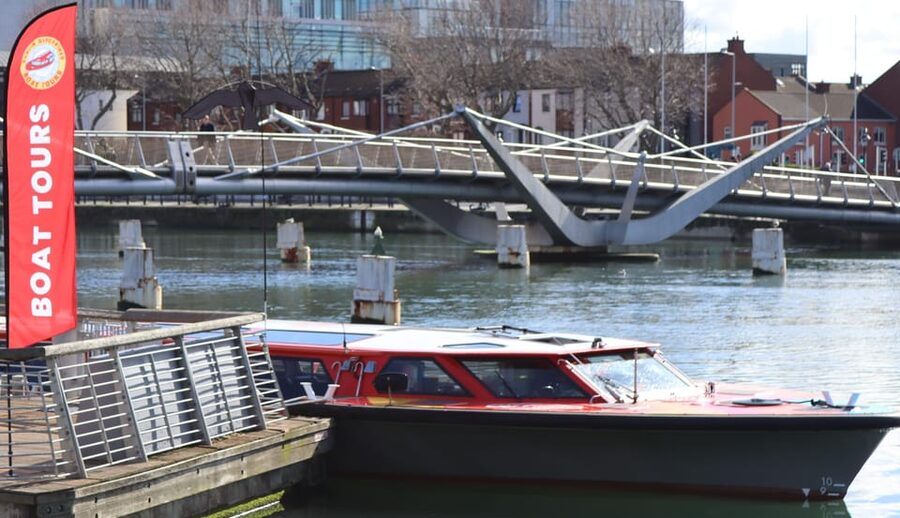
All cruises leave from the pontoon beside the Sean O’Casey Footbridge, on the north side of the river at Custom House Quay. Look for the pontoon opposite the CHQ building. You should arrive about 10 minutes before your booked time so the crew can check you in and give you boarding instructions.
This is a central and practical starting point. You do not need a hotel transfer, and the cruise returns to the same place. That makes it easy to fit between visits to nearby sights, though the activity itself does not include pickup or drop-off.
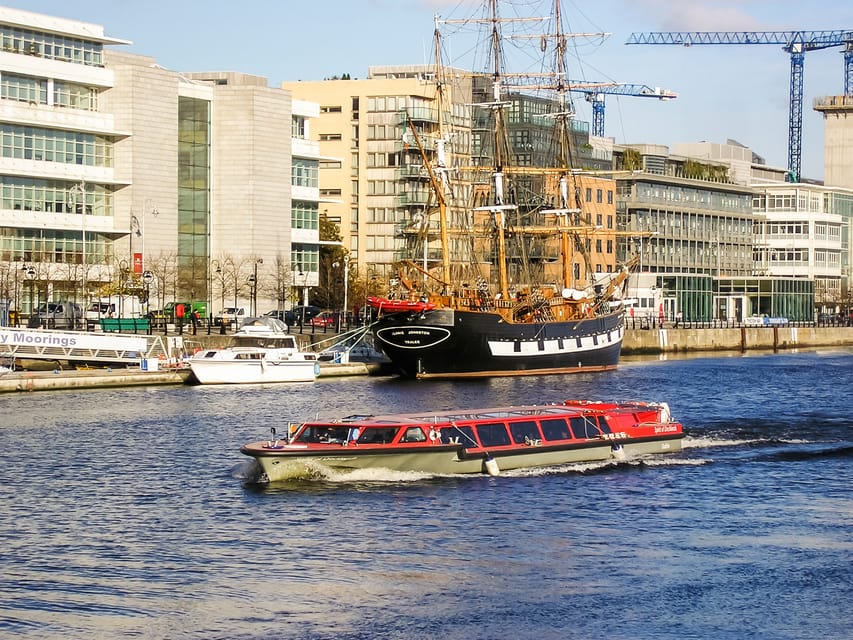
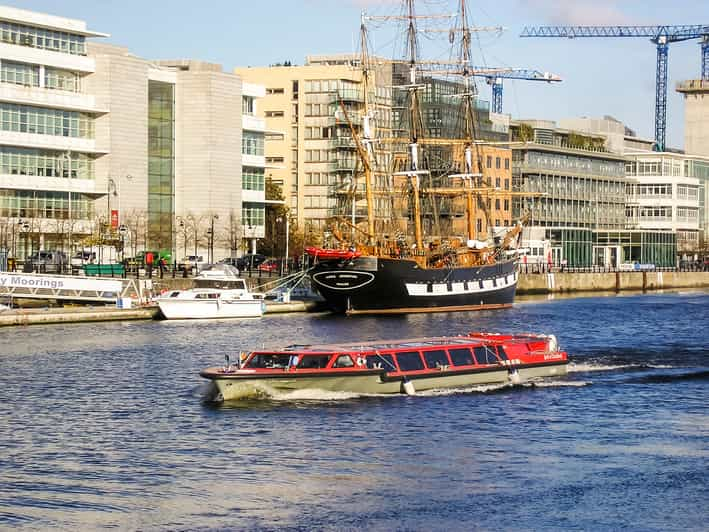
The boat carries 48 passengers and is designed for all-weather use. That matters in Dublin. On a dry day, the river gives you open views of the quays and bridges. On a gray or rainy day, the covered boat lets you keep the plan without gambling on the forecast.
The vessel has been described as clean and comfortable, and several sailings have not felt overly crowded. Still, space is limited by the boat’s size. Arriving on time is wise, especially if you want a clear view or prefer to sit close to the guide.
There are no toilets on board, so use facilities before boarding. One practical tip from the crew is to use the toilets across the road before the trip. For a 45-minute sailing this is not a serious problem, but it is worth knowing before you step aboard.
Following Dublin’s Story From the Water
Once the boat leaves the pontoon, the commentary begins to connect the river with the city’s past. The Viking arrival more than 1,000 years ago provides the starting point. From there, the guide moves through Dublin’s growth and the changes that shaped the waterfront.
The Viking section gives you useful context for understanding why Dublin developed here. The Liffey offered access, transport, and trade, and the river remained central as the city expanded. You will not get an academic lecture, but the guide gives you enough background to make the later sights more meaningful.
The cruise also explains Dublin’s rapid development in the 18th and 19th centuries. This is where the trip becomes more than a quick scenic ride. The quays, bridges, and formal buildings reflect different stages of the city’s ambitions, and the guide helps you see those layers from a single route.
You also hear about the Royal and Grand Canals. These waterways show how Dublin once depended on a wider transport network, not just the Liffey itself. The story of the canals adds a useful reminder that the river was part of a much larger system linking the city with the country beyond it.
One unusual historical detail is the account of Oliver Cromwell landing in Dublin in 1649. It is the sort of fact that may be easy to miss when you explore independently, but it gives the river a direct connection to a turbulent period in Irish history.
The guide also covers Captain William Bligh’s survey of Dublin Bay in 1800. That detail helps explain the relationship between the river and the bay, especially as the cruise continues toward the port. You get a sense of how navigation, mapping, and engineering affected the city’s future.
The Ha’penny Bridge and Custom House
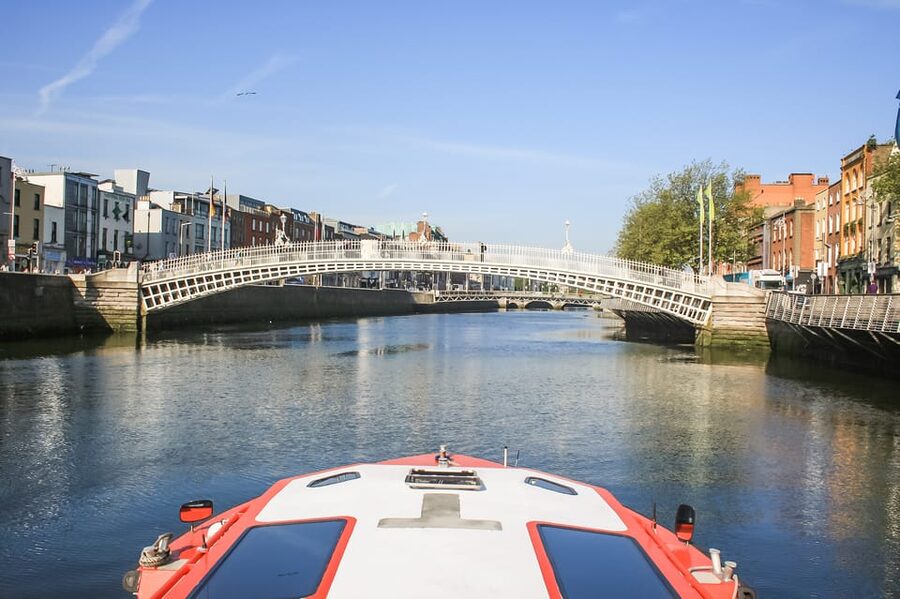
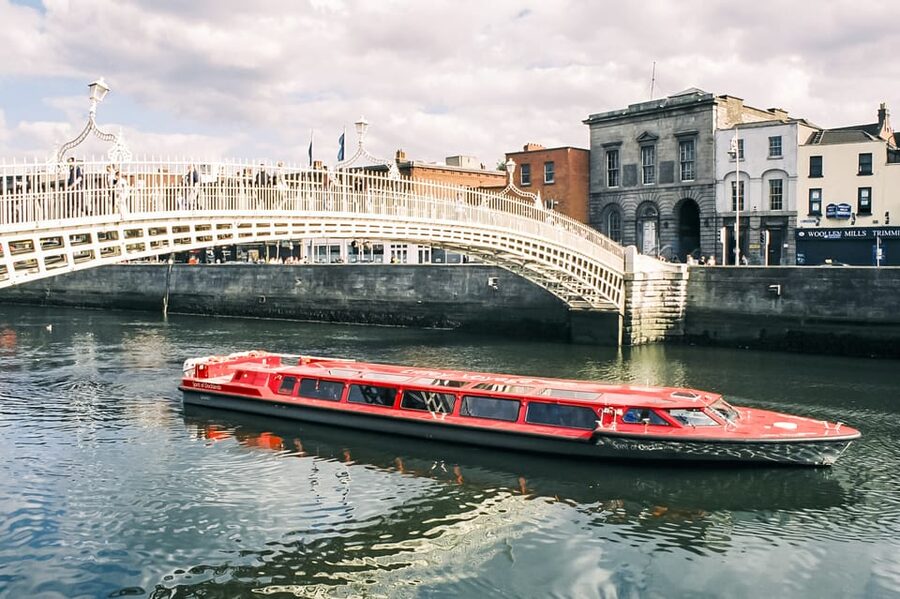
The Ha’penny Bridge is one of the most recognizable sights along the Liffey. From the boat, you see it at water level rather than from the pavement, which changes the proportions of the bridge and the buildings around it.
The guide explains the bridge as part of Dublin’s daily life and visual identity. It is a short stop in the wider story, but an important one. You will likely have seen photographs of the Ha’penny Bridge before arriving in Dublin. The river view gives you a better sense of how it functions as a link between the two sides of the city.
Custom House offers a different mood. This grand building reflects Dublin’s Georgian-era development and its long connection with trade and administration. From the water, the building fits into the working riverfront rather than appearing as an isolated landmark.
The commentary about Gandon’s masterpiece helps you read the architecture in context. You can look up at the façade, then look along the quays and see the practical reason such a building occupied this position. The river was both a transport route and a stage for public architecture.
This part of the cruise is particularly good for first-time visitors because it gives you reference points you can use later. After the boat returns, crossing the Ha’penny Bridge or walking past Custom House feels less like passing a postcard and more like revisiting a story.
More Sightseeing Cruises in the world:
- Budapest: City Highlights Sightseeing Cruise
★ 4.6 · 43,981 reviews - Prague: 50-Minute Sightseeing Evening Cruise
★ 4.2 · 33,780 reviews - Budapest: Nighttime or Daytime Sightseeing Cruise
★ 4.2 · 21,062 reviews - Budapest: By Night Sightseeing Cruise with Welcome Drink
★ 4.3 · 15,533 reviews
The Jeanie Johnston and Dublin Docklands
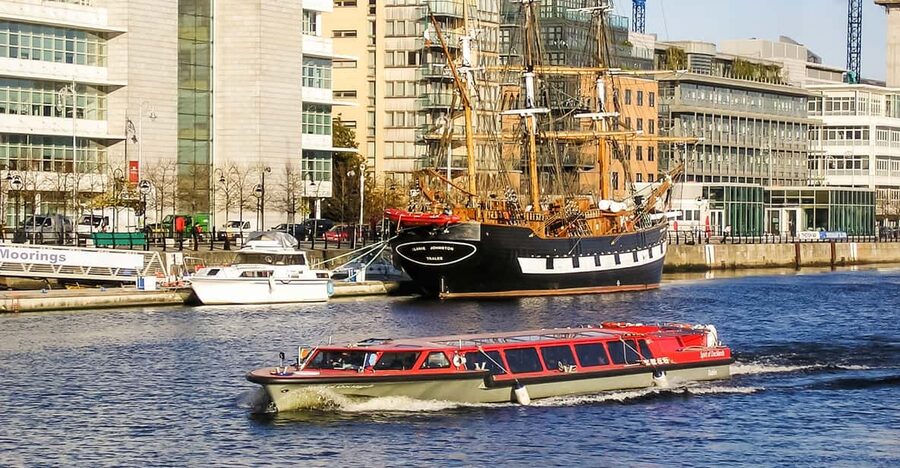
The cruise passes the Jeanie Johnston, a full-size replica famine ship and one of the most striking sights near the modern waterfront. Seeing it from the river gives you a quick but useful connection between Dublin’s maritime past and the people who left Ireland by sea.
The boat then continues through the Docklands area, where older industrial spaces sit beside newer offices and redevelopment. This is one of the most interesting parts of the route because the changes are visible from the deck. You can see how the waterfront moved from work and transport toward business, housing, and tourism.
The guide’s account of Docklands decline and renewal gives the modern buildings some context. Without that explanation, the area can look like a collection of recent construction. With it, you can see the larger shift in Dublin’s relationship with the river.
The route also touches on reclaimed land. A striking detail in the commentary is that parts of present-day Dublin, including land associated with Trinity College and the Spire on O’Connell Street, now sit on ground reclaimed from water. That fact changes how you think about the city. Dublin’s shape is not entirely natural or fixed. It has been extended and remade over time.
Because this is a river cruise rather than a walking tour, you will not stop at the Jeanie Johnston or explore Docklands on foot. Treat these sights as part of a wider moving view. If one catches your interest, note it down and return later for a closer look.
Where the Liffey Meets the Sea
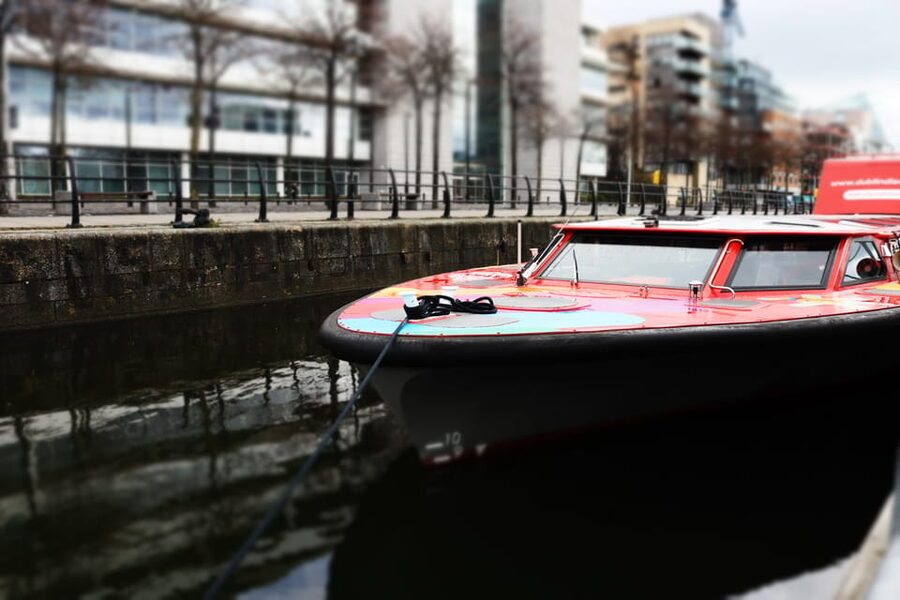
The cruise heads toward the edge of Dublin Port, where the river opens toward Dublin Bay. This is the point where the city begins to feel less enclosed. The changing view helps you understand the phrase where the city meets the sea in a direct, physical way.
The port is not presented as a polished sightseeing district. That is part of its value. You see the working edge of Dublin and the routes that connected the city to Ireland and the wider world. The river looks different here than it does beside the central bridges, and the contrast makes the earlier city views more useful.
Tides affect what the boat can safely reach and how close it can pass beneath some bridges. One sailing at high tide made the clearance under the bridges feel particularly close. The crew was open about the conditions and adjusted expectations when needed.
This is worth keeping in mind when you book. The planned route is subject to availability and tidal conditions, so not every sailing will feel exactly the same. If a selected time or date cannot operate as planned, the operator will contact you to arrange another sailing.
What the Guides Add
The guide is the heart of this experience. The best commentary is funny without losing the thread of the history, and informative without turning into a lecture. Several guides have been singled out by name for their style, including Gerry, Jerry, Tony, Peter, and Lucy.
Peter has been described as a strong storyteller, while Lucy is praised for speaking clearly and giving enough information without overloading the group. Gerry and Jerry are associated with lively, friendly commentary, and Tony has also been part of the guiding and crew team. These names do not guarantee who will be on your boat, but they show the range of personalities used by the operator.
The captain may add small observations of his or her own. That two-person rhythm works well. One person handles the boat while the other keeps the history moving, and the occasional comment from the captain adds a relaxed feel.
There is one sound-related weakness. Loud conversations from other passengers can make parts of the commentary difficult to hear. You cannot control the whole boat, but sitting close to the guide and avoiding the noisiest area can help.
The English commentary is the only language option listed. If you are comfortable following spoken English, the informal delivery should be easy to follow. If you need a multilingual tour, this is not the right fit.
Is $23 Good Value for 45 Minutes?
At $23 per person, this is not the cheapest way to see Dublin, but it offers a clear return for a short activity. You get a river perspective, a live local guide, a compact history of the city, and a convenient start and finish in the center.
The price makes the most sense if you value orientation. A 45-minute cruise can save you from spending your first day walking past sights without understanding how they fit together. It is also a useful choice when rain, tired feet, or a tight schedule makes a longer walking tour less appealing.
The limitation is obvious: you are paying for a short ride. If you want extensive time on the water, a full Dublin Bay excursion, or stops at several attractions, this will feel too brief. The route is best understood as a city introduction, not a complete maritime tour.
I consider it good value for a first visit, especially if you enjoy history delivered with humor. It is less essential for someone who has already explored the Liffey closely and wants a longer or more specialized boat trip.
Who Will Enjoy This Cruise Most?
I would suggest this cruise to first-time visitors who want to understand Dublin quickly. Families may appreciate the short duration, and the boat’s all-weather design makes it practical when the forecast is uncertain.
It also suits anyone who finds city orientation easier from a moving viewpoint. The cruise gives you landmarks, bridges, port views, and Docklands in one compact route. You can then choose which areas deserve more time on foot.
The boat is wheelchair accessible, which makes it a useful option for visitors who need an accessible sightseeing activity. You should still arrive early and follow the crew’s instructions at the pontoon.
The cruise is less suitable if you need silence, a long open-water voyage, or commentary in another language. It may also disappoint if you expect to leave the boat at the Jeanie Johnston, Docklands, or Dublin Port. Those are passing views, not stops.
Booking is flexible. You can cancel up to 24 hours in advance for a full refund, and the reserve-now, pay-later option lets you hold a place without paying immediately. The sailing remains subject to availability and tides.
Should You Book the River Liffey Cruise?
Book it if you want a friendly, well-paced introduction to Dublin from a viewpoint you cannot get on foot. The combination of Viking origins, Georgian buildings, the Ha’penny Bridge, Jeanie Johnston, Docklands, reclaimed land, and Dublin Port gives the 45 minutes a surprising amount of content.
I would book it early in a Dublin visit, then use the guide’s stories to shape the rest of your sightseeing. Arrive 10 minutes early, use the toilet before boarding, and sit where you can hear the commentary clearly.
Skip it if you want a long bay cruise or a stop-and-explore itinerary. For most visitors, though, $23 is a fair price for a compact river tour with strong local storytelling, practical city context, and a welcome break from Dublin’s pavement.
FAQ
Where does the Dublin River Liffey cruise depart?
The cruise departs from the operator’s pontoon at the Sean O’Casey Footbridge on the north side of the river, at Custom House Quay, opposite the CHQ building.
Where does the cruise finish?
The cruise returns to the same pontoon at Custom House Quay.
How long does the cruise last?
The cruise lasts 45 minutes.
What language is the tour conducted in?
The live tour guide provides commentary in English.
How many passengers can the boat carry?
The boat is an all-weather vessel with capacity for 48 passengers.
Is the boat wheelchair accessible?
Yes, the activity is listed as wheelchair accessible.
Do I need to arrive before the scheduled sailing?
Yes. You should arrive about 10 minutes before your booked cruise time to check in and receive instructions from the crew.
Is hotel pickup included?
No. Hotel pickup and drop-off are not included. You make your own way to the pontoon.
Are toilets available on board?
No toilets are available on the boat. The crew advises using the toilets across the road before departure.
Can tides change the cruise?
Yes. Bookings depend on availability and tidal conditions. If the selected sailing cannot operate as planned, the operator will contact you about an alternative sailing.
Just added on the water around the world
- Hoi An/Da Nang: Snorkelling & Island-Hopping Speedboat Tour★ 4.6 · 397 reviews
- From Paihia: Scenic Cruise with Roberton Island Stopover★ 4.8 · 332 reviews
- Holbox: Yum Balam Reserve Classic Boat Tour★ 4.7 · 470 reviews
- Hoi An: My Son Sanctuary and Thu Bon River Boat Trip★ 4.6 · 653 reviews
- Hoi An: My Son Sanctuary, Rice Paper, Boat Trip & Lunch★ 4.8 · 1,154 reviews
- Hoi An/Da Nang: My Son Sunset Tour, Boat Trip with Brunch★ 4.4 · 322 reviews
- Hoi An: River Lantern Boat Experience with Free 5G eSIM★ 4.5 · 1,819 reviews
- Hoi An: Coconut Basket Boat Ride by Hangcoconut★ 4.8 · 1,364 reviews
Sightseeing Cruises, side by side.
Budapest: City Highlights Sightseeing Cruise
Read our review →
Prague: 50-Minute Sightseeing Evening Cruise
Read our review →
Budapest: Nighttime or Daytime Sightseeing Cruise
Read our review →
Budapest: By Night Sightseeing Cruise with Welcome Drink
Read our review →
Istanbul: Daytime or Sunset Sightseeing Cruise & Audio Guide
Read our review →
Stockholm: City Archipelago Sightseeing Cruise with Guide
Read our review →
Seville: 1-Hour Guadalquivir River Sightseeing Eco Cruise
Read our review →
Budapest: 1-Hour Evening Sightseeing Cruise with Drink
Read our review →Other lists this boat trip sits in