
Review · BELGIUM
Ghent: 50-Minute Medieval Center Guided Boat Trip
Ghent’s medieval center makes the most sense from the water. On this 50-minute canal ride, you glide past the Three Towers, old guildhalls, castles, churches, and mercantile houses while a guide fills in the stories behind the stonework. It is an easy way to get your bearings before exploring on foot.
I like the mix of excellent central views and lively guiding. Several guides, including Kobe, Brent, Kristi, Tom, and Anna, have been praised for clear explanations, humor, and switching between languages. I also like the price: at about $12, this gives you a gentle introduction to Ghent without taking up half your day.
The main consideration is the weather. The boat runs rain or shine, and the open boats can feel chilly outside winter. The covered roof helps, though it may limit access to some lower passages that an open boat can reach.
Key points to know before boarding
- The Three Towers appear from a memorable canal-side angle: Saint Nicholas’ Church, the Belfry, and Saint Bavo’s Cathedral form Ghent’s best-known skyline.
- Gravensteen is the dramatic centerpiece: The Castle of the Counts rises directly beside the boarding area and looks especially imposing from the water.
- Guiding is part of the value: Live commentary is offered in English, Dutch, and French, with illustrated information in German, Spanish, Italian, Russian, and Japanese.
- Weather protection is practical, not fancy: Umbrellas are available when it rains, and blankets are provided on winter departures.
- The schedule is flexible in the warmer months: Boats leave every 20 minutes from 10:00 to 18:00 between April 1 and October 31.
- It is best used as an introduction: You see many major sights, but you do not go inside them, so plan time afterward for walking and visits.
Why Ghent is best understood from the canals
Ghent can feel slightly confusing at first. Its medieval core is compact, but the important buildings are spread along waterways, squares, and narrow lanes. From a boat, the city’s old commercial life becomes easier to read.
The canals were not decorative additions. They helped Ghent move goods and connect its medieval trading center with the wider region. As you pass beneath bridges and along old quay walls, you see why the city grew wealthy. The water runs beside houses built for trade, storage, craft work, and civic power.
This view also saves your feet. In less than an hour, you pass the city’s headline buildings without rushing from one square to the next. I particularly like taking this kind of trip near the start of a stay, then returning on foot to the places that caught your eye.
Do not expect a full architectural lecture at every building. The pace is steady, and the guide must keep commentary short enough for several languages and changing views. The result is more of a lively orientation than a specialist seminar.
More Guided Boat Trips in the world:
- From Marrakech: Ouzoud Waterfalls Guided Hike and Boat Trip
★ 4.7 · 33,630 reviews - Amsterdam: 75 Minute City Canal Cruise with Audio Guide
★ 4.4 · 19,938 reviews - Paris: Louvre Guided Tour with Reserved Access & Boat Cruise
★ 4.3 · 16,353 reviews
Boarding near the Castle of the Counts
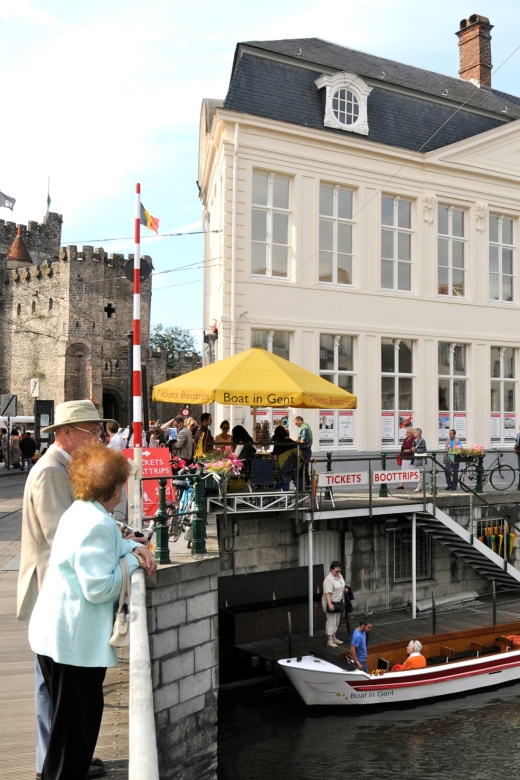
The departure point is near Gravensteen, also called the Castle of the Counts, with the operating company listed as Boat in Gent, Rederij Dewaele. There are two possible starting location options, so check the exact meeting point attached to your booking rather than assuming every departure uses the same dock.
The castle is an excellent place to begin. Its heavy medieval walls and towers rise close to the water, giving you an immediate sense of Ghent’s defensive past. The boat’s low position makes the stonework look even more imposing.
A ticket is valid for one trip, taken at a time available during the ticket’s one-day validity. In the warmer season, the frequent departures make it easy to fit the ride between a church visit and lunch. Winter service is less frequent, so allow more room in your plan.
Boarding details are simple, but the dock area can be busy in central Ghent. Have your ticket ready and arrive with enough time to identify the correct boat. Assistance getting on and off has been provided during rainy conditions, but the supplied information does not promise step-free boarding.
Graslei and the old mercantile waterfront
Soon after leaving the dock, the boat passes Graslei, one of Ghent’s most attractive stretches of historic waterfront. This is where the city’s commercial character comes through most clearly.
The buildings along the quay are not all from one period, and their facades show different styles and former uses. From the canal, you get a clean view of the fronts without parked cars or pedestrians blocking the lower levels.
This is one of the best points for photographs, but it is also one of the busiest areas on foot. The boat gives you a calmer look. Listen for the guide’s explanation of the quay walls and mercantile houses, then return later if you want to study individual facades at street level.
The water-level view has one limitation: you see the outside only. If you want interiors, museum displays, or a close look at carved details, you will need to continue on foot after the cruise.
The Three Towers: Saint Nicholas, the Belfry, and Saint Bavo
The boat then passes Saint Nicholas’ Church, the Belfry of Ghent, and Saint Bavo’s Cathedral. Together, these buildings create the city’s famous Three Towers.
Saint Nicholas’ Church is closely tied to the old merchants and craft workers of the city. Its position beside the former commercial center helps explain why it became such an important part of Ghent’s skyline.
The Belfry is the civic tower, a symbol of the city’s independence and public power. From the water, you see it as part of a larger group rather than as an isolated monument. The changing angle is useful because the narrow streets around the towers can make it hard to appreciate their full height.
Saint Bavo’s Cathedral adds a church setting to the trio. The boat does not replace a visit inside, but it gives you a quick visual map of the central monuments. If you plan to see all three on foot, note where each one sits in relation to the others.
The guide’s timing matters here. Several riders have praised guides for leaving enough time to look up and take pictures instead of rushing past the buildings. Keep your camera ready, but do not spend the whole passage looking through a screen.
More boat trips around the world:
- Paris: 1-Hour Seine Cruise departing from the Eiffel Tower
★ 4.4 · 77,472 reviews - Istanbul: Bosphorus Dinner Cruise & Show with Private Table
★ 4.8 · 62,058 reviews - Budapest: City Highlights Sightseeing Cruise
★ 4.6 · 43,981 reviews - Budapest: Unlimited Prosecco, Beer and Aperol Spritz Cruise
★ 4.8 · 37,304 reviews
Guildhalls and the working city
The old guildhalls of the laborers and craft groups are another major part of the ride. Their facades point to a city organized around skilled work, trade, and shared professional interests.
These buildings are easy to admire as picturesque rows, but the commentary gives them purpose. A good guide connects the architecture with the people who used the buildings and the goods that passed along the water.
This is where the live narration earns its place. The ride would still be scenic without a guide, but the short stories make the facades easier to remember. The most successful guiding style here is light and conversational. Guides have been praised for mixing clear facts with jokes, personal recommendations, and occasional songs.
Commentary is live in English, Dutch, and French. The guide may speak several languages during the same trip, so expect some pauses or repeated information. If you prefer a longer explanation in one language, the boat also carries illustrated translations in German, Spanish, Italian, Russian, and Japanese.
The Old Fish Market and Great Butcher’s Hall
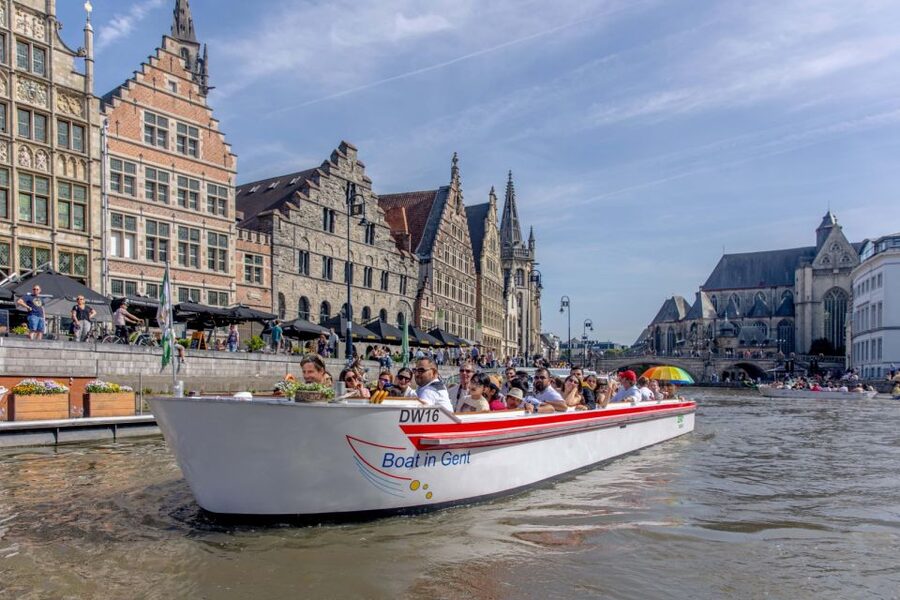
The route passes the Old Fish Market and the Great Butcher’s Hall, two stops that help you picture how food entered and moved through medieval Ghent.
The Old Fish Market adds another layer to the city’s relationship with the water. The canal was a working route, not just a pretty backdrop. The Great Butcher’s Hall recalls the regulated sale and storage of meat in the historic center.
From the boat, these sites work best as part of the wider story. You will not spend long at either one, and the ride does not include an interior visit. Still, they break up the sequence of grand churches and castles with details about everyday urban life.
That balance is one reason I find this tour useful for first-time visitors. It is not only a procession of famous monuments. You also get quick clues about how people worked, traded, ate, and moved through the city.
Gravensteen, the Castle of the Counts
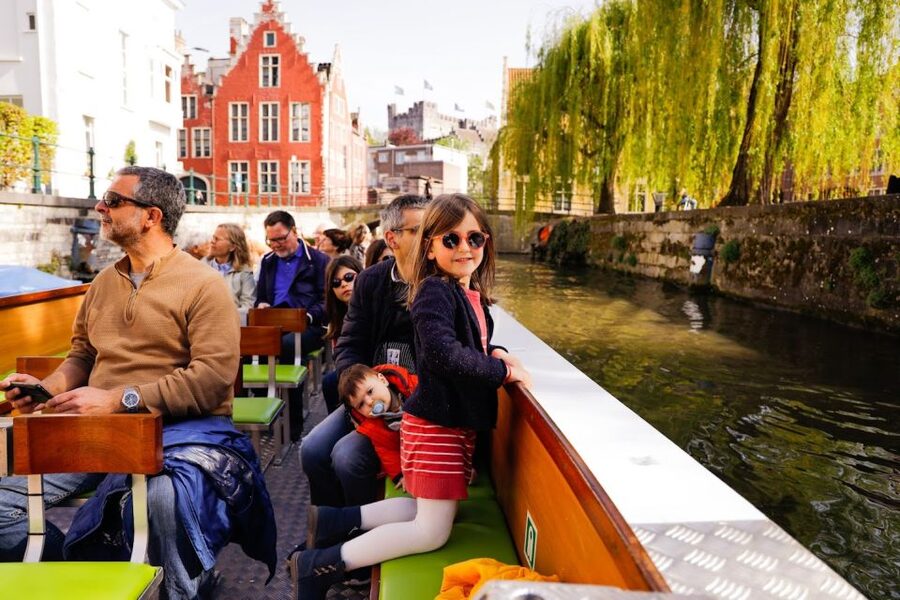
Gravensteen is the visual high point of the route. The castle sits directly beside the waterways, with thick walls and towers that make the medieval center feel unusually dramatic.
Seeing it from the water gives you a different sense of scale than approaching through the streets. The boat moves slowly enough for pictures, and the guide explains the castle’s place in Ghent’s story. The exact amount of detail depends on the guide and the pace of the departure, but this is one of the moments when the live narration matters most.
If you have time, plan a separate visit inside the castle. The boat shows you the outside and its relationship to the canal. It does not include admission or time to explore the rooms and towers.
The castle’s position also makes the ride easy to combine with walking. You can board near Gravensteen, take the cruise, and then continue directly into the medieval center. That saves backtracking and makes the trip a practical first activity.
The Prince’s Court and the final stretch
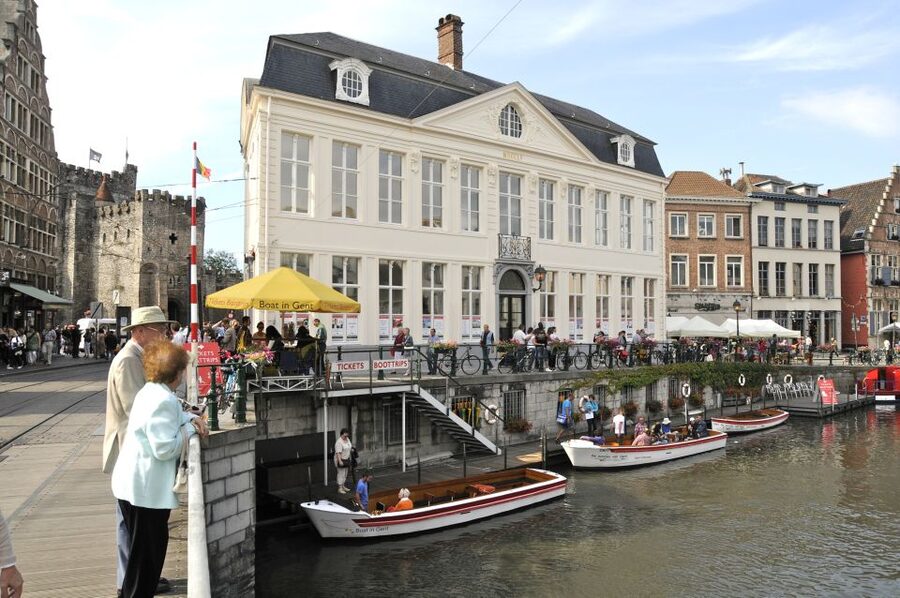
The boat also passes the Prince’s Court, connected with Ghent’s royal and civic past. This section helps widen the picture beyond the canal-front buildings. Ghent was not only a merchant town. It was also tied to rulers, court life, and major political events.
The route includes the birthplace of Charles V of Spain, another reminder that the city played a role far beyond local trade. The guide’s short explanations give you a useful framework for understanding why these buildings mattered.
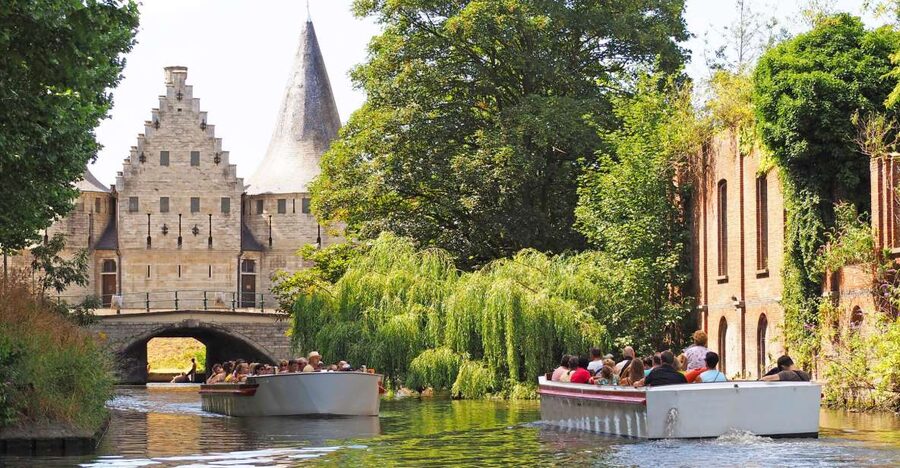
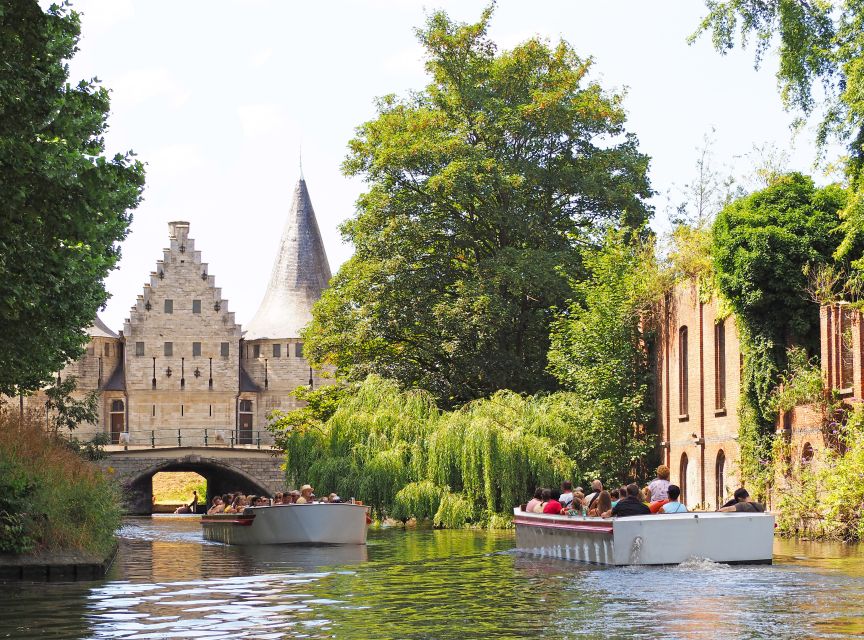
The exact rhythm of the final minutes depends on water traffic, weather, and the boat being used. Some open boats can pass beneath a low tunnel that covered boats cannot, while covered boats may be more comfortable in cold or wet conditions. This is a small but useful tradeoff: open boats can offer a slightly longer route, while roofed boats provide better shelter.
The ride finishes back at Boat in Gent. That return point makes it easy to continue sightseeing in the center, though you should confirm the precise dock if your booking presents more than one departure option.
What the boat is like in different weather
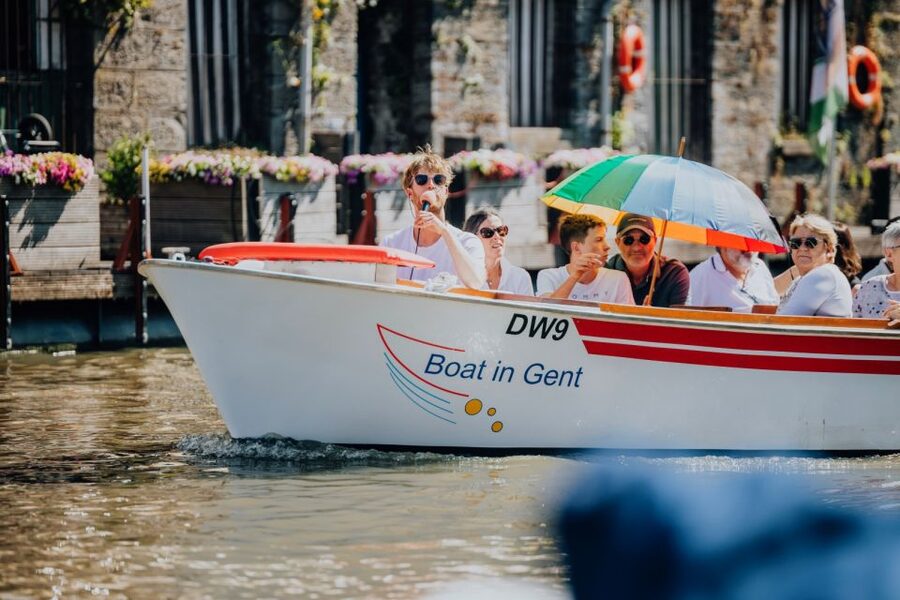
This is a rain-or-shine activity. That is helpful when you have a tight sightseeing plan, but it also means you should dress for the forecast rather than assume the roof will solve everything.
Umbrellas are available when it rains. During winter tours, blankets are provided, and the roof can be mostly closed. Those details make the ride more manageable in cold weather, though no canal boat becomes warm simply because a roof is lowered.
Open boats offer better visibility and can sometimes reach passages that are too low for a covered boat. They are also more exposed to wind and rain. Covered boats are the safer choice for comfort in poor weather, but you may have less access to the low tunnel route.
In summer, the open-air option should give you the clearest view of the upper stories and towers. In colder months, bring a warm layer even if the forecast looks mild. The boat moves slowly, so you feel the air more than you would while walking.
Pets are not allowed, except for assistance dogs. That is worth knowing before you arrive.
Is $12 a fair price?
At about $12 per person, the boat trip offers good value if you want a compact introduction to Ghent. You see many of the city’s major sights, receive live commentary, and avoid spending your first hour working out the historic center’s layout.
The value is strongest for first-time visitors, short stays, and anyone who wants a break from walking. It also works well for families or mixed-age groups because the ride is gentle and the route does not demand much physical effort.
The price is less compelling if you want extended time at each building. This is a panoramic tour, not an admission ticket to the cathedral, castle, Belfry, or churches. You will still need to pay for or arrange those visits separately if you want to go inside.
I would treat the cruise as a city introduction rather than your only Ghent activity. At this price, it gives you context and a pleasant view, then leaves the rest of the day free.
Best departure times and planning tips
From April 1 through October 31, departures run every 20 minutes from 10:00 to 18:00. That makes this the easiest period for spontaneous planning.
From November 1 through March 31, boats leave every 30 minutes from 10:45 until 16:15. Daylight is shorter, and the lower number of departures means you should check availability before building your day around the ride.
I like taking the boat early in a Ghent visit. You can note the buildings that deserve a closer look, then walk back through Graslei, the Three Towers, Gravensteen, and the old markets. A later ride works well if you want to rest your feet after a morning of museums and churches.
For the best view, sit where you can look both forward and sideways. The route includes tall towers and close canal walls, so you will want to shift your attention rather than watch only one direction. Keep your phone or camera ready, but listen during the guide’s short explanations.
The tour lasts about 50 minutes, although one departure was reported as taking under 30 minutes. If your day depends on a precise finish time, allow a little extra room rather than scheduling a tight connection immediately afterward.
Who should book this Ghent canal trip?
I would recommend it to anyone visiting Ghent for the first time, especially if you want a quick orientation without a long walking tour. It suits couples, families, older visitors, and anyone who enjoys architecture but does not want a heavy lecture.
It is also a good choice for people who speak English, Dutch, or French. The illustrated translations make the route more accessible to people using German, Spanish, Italian, Russian, or Japanese, though the experience remains mainly a live guided boat trip.
You may want to skip it if you dislike sitting outside in uncertain weather or if you want detailed access to the monuments. In that case, walking the center and visiting the buildings directly will give you more depth.
Should you book the 50-minute Ghent boat trip?
Book it if you want a low-cost first look at medieval Ghent, a relaxed hour on the canals, and a guide who can make history entertaining. The Three Towers, Gravensteen, guildhalls, old markets, and quay houses create a strong route, and the frequent summer departures make the timing easy.
Think twice only if the weather is poor and you are especially sensitive to cold, or if you expect a long, detailed tour of each monument. For most visitors, the sensible plan is to take the boat early, use the commentary to choose your priorities, then explore the most interesting buildings on foot.
FAQ
How long is the Ghent boat trip?
The advertised duration is 50 minutes. One departure was reported as taking under 30 minutes, so allow some flexibility if you have a fixed schedule afterward.
How much does the boat tour cost?
The listed price is $12 per person.
Where does the boat tour start?
There are two possible starting location options associated with Boat in Gent and Rederij Dewaele. Your exact meeting point may depend on the option booked.
Which languages are used for the live guide?
Live guiding is available in Dutch, English, and French.
Are other languages available?
Yes. Illustrated translations are available on board in German, Spanish, Italian, Russian, and Japanese.
How often do boats depart in summer?
From April 1 through October 31, departures run every 20 minutes between 10:00 and 18:00.
How often do boats depart in winter?
From November 1 through March 31, departures run every 30 minutes from 10:45 to 16:15.
What happens if it rains?
The tour operates rain or shine. Umbrellas are available on board, and winter tours include blankets. Covered and open boat arrangements can vary.
Are pets allowed?
Pets are not allowed, but assistance dogs are permitted.
Just added on the water around the world
- Hoi An/Da Nang: Snorkelling & Island-Hopping Speedboat Tour★ 4.6 · 397 reviews
- From Paihia: Scenic Cruise with Roberton Island Stopover★ 4.8 · 332 reviews
- Holbox: Yum Balam Reserve Classic Boat Tour★ 4.7 · 470 reviews
- Hoi An: My Son Sanctuary and Thu Bon River Boat Trip★ 4.6 · 653 reviews
- Hoi An: My Son Sanctuary, Rice Paper, Boat Trip & Lunch★ 4.8 · 1,154 reviews
- Hoi An/Da Nang: My Son Sunset Tour, Boat Trip with Brunch★ 4.4 · 322 reviews
- Hoi An: River Lantern Boat Experience with Free 5G eSIM★ 4.5 · 1,819 reviews
- Hoi An: Coconut Basket Boat Ride by Hangcoconut★ 4.8 · 1,364 reviews
Belgium Boat Tours, side by side.
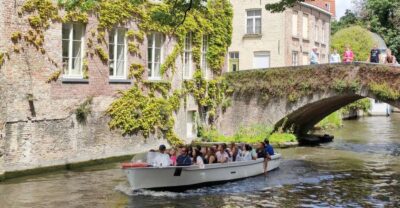
Bruges: Small Group Boat Cruise and Guided Walking Tour
Read our review →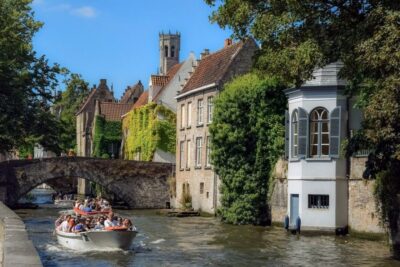
Bruges: Guided Tour & Boat Ride with Optional Beer Tasting
Read our review →
From Amsterdam: Bruges Day Trip in English with Boat Option
Read our review →
From Brussels: Bruges Day Trip with Boat Tour Option (ENG)
Read our review →
From Paris: Day Trip to Bruges with Optional Seasonal Cruise
Read our review →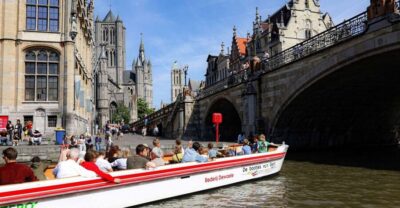
Ghent: 40 Minute Medieval Center Guided Boat Tour
Read our review →
Ghent: 40-Minute Historical Boat Tour of City Center
Read our review →Other lists this boat trip sits in