Review · PARIS
Paris Seine River Hop-On Hop-Off Sightseeing Cruise by Batobus
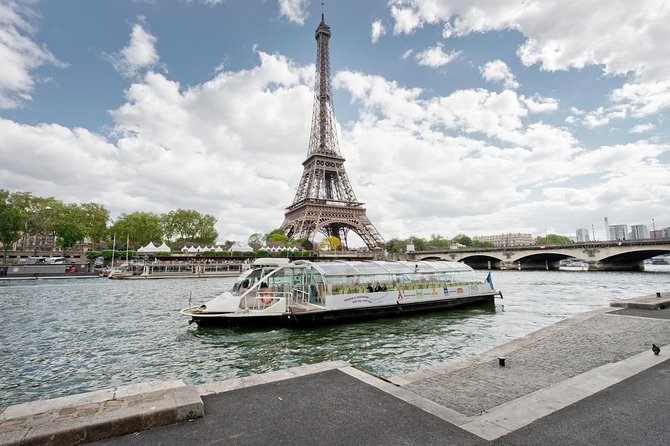
The best thing about the Batobus is simple: Paris becomes your route map. Instead of squeezing onto a bus or walking from one major sight to the next, you ride the Seine between the Eiffel Tower, Musée d’Orsay, Notre Dame, the Louvre, and other central stops. The full loop takes about two hours, but your 24 or 48-hour pass lets you get off whenever you like.
I like the scenic break from city traffic, especially after a museum visit, and I like the freedom to spend as long as you wish at each stop. Boats are clean, staff are generally friendly, and the rear terrace gives you open-air views. The main catch is that this is transport with a view, not a fully guided cruise. You must use the web app for commentary, and service hours or boat schedules can change.
Key points to know before you board
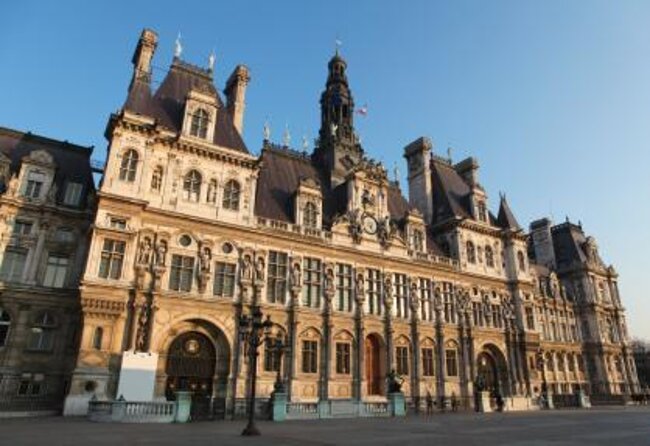
- Nine central Seine stops: Reach the Eiffel Tower, Invalides, Musée d’Orsay, Saint-Germain, Notre Dame, the Latin Quarter, the Hôtel de Ville, the Louvre, and the Champs-Élysées area.
- A full loop takes about two hours: Plan extra time if you need to reach a fixed museum reservation or dinner booking.
- Choose 24 or 48 consecutive hours: The longer pass costs only a few euros more and gives you more time to use the boat as transport.
- Commentary comes through a web app: English, French, Spanish, German, and Italian are available, but you need your phone and internet access.
- Pack light: Large luggage over 16 liters is not allowed, and coats and jackets must be opened during bag checks.
- No onboard toilet: Use facilities before boarding or during your stop, especially if you plan to spend several hours on the route.
Why the Seine makes a useful Paris transport line
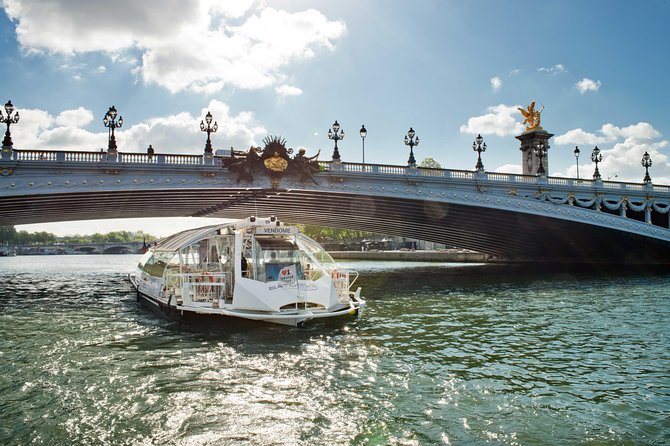
The Seine cuts through the part of Paris most visitors want to see. The Batobus takes advantage of that geography, linking major monuments without forcing you to cross busy streets or figure out a new Metro entrance each time.
You can use it as a sightseeing cruise, but I find it most useful as a relaxed transport pass. Ride from the Eiffel Tower to Musée d’Orsay, stop for art, then continue toward Notre Dame or the Louvre. You still need to walk from each dock to the attraction, but the boat handles the long central stretch.
The river also gives you a different view of Paris. Bridges, stone embankments, grand façades, and monuments line the UNESCO-listed banks. The rear open terrace is the best place for photographs and fresh air, though seating and weather conditions can affect how comfortable the ride feels.
This is not a narrated tour in the traditional sense. There is no guide walking around explaining every building, and the boat operators mainly manage the route and stops. The multilingual commentary is accessed through the Batobus web app, along with an interactive map and suggestions for nearby activities.
More River Cruises in France
- Paris: 1-Hour Seine Cruise departing from the Eiffel Tower
★ 4.4 · 77,472 reviews - Paris: Evening River Cruise with Music
★ 4.4 · 22,721 reviews - Paris: Tootbus Hop-on Hop-off (Optional River Cruise)
★ 4.3 · 15,279 reviews
The nine stops and what each one gives you
1. Port de la Bourdonnais for the Eiffel Tower
This is the natural starting point for many visitors. Port de la Bourdonnais sits beside the Eiffel Tower, making it easy to combine a boat ride with a visit to Paris’s most recognizable monument.
The closest transport links are Bir-Hakeim on Metro line 6, Trocadéro on lines 6 and 9, and the Champ de Mars-Tour Eiffel RER C station. If you arrive by Metro, expect some walking before you reach the riverbank.
I suggest using this stop early in your pass if the Eiffel Tower is high on your list. You can ride first for a broad view of the city, then return later for the tower itself. If you board late in the day, check the final departure carefully. On July 14, French National Day, the last departure is at 5:00 PM.
2. Port des Invalides for grand river views
Port des Invalides places you near Les Invalides, with its large dome and military museums. The stop also gives you access to the Invalides Metro station on lines 8 and 13 and the RER C.
This is a good pause between the Eiffel Tower and the central museums. The river view here is especially useful for understanding how the broad avenues and monumental buildings relate to the Seine.
If you are planning a timed museum visit, allow more time than the river distance suggests. The boat may be convenient, but it is not as predictable as a direct Metro ride. Boats can take a while to arrive, and the whole route moves in the same loop.
More River Cruises in Paris
- Paris: Illuminations River Cruise with Audio Commentary
★ 4.3 · 12,340 reviews - Paris: Seine Cruise & Crepe Tasting near the Eiffel Tower
★ 4.4 · 11,231 reviews - Paris: Seine River Panoramic Views Dinner Cruise
★ 4.3 · 10,611 reviews - Paris: Louvre Museum Entry Ticket With Host and River Cruise
★ 4.6 · 9,926 reviews
3. Musée d’Orsay for art and the Left Bank
The Musée d’Orsay stop is one of the most useful on the route. The museum occupies a former railway station and is known for its major Impressionist collection, making it an easy pairing with a Seine ride.
The RER C stop is Musée d’Orsay, while the itinerary also lists Assemblée Nationale on Metro line 12 nearby. Once you leave the dock, you can walk toward the museum and the Left Bank streets.
This is a good place to get off after a ride from the Eiffel Tower. The boat gives your legs a rest, then the museum provides a substantial indoor stop. Since there is no toilet on the boat, museum and café stops are also practical breaks.
4. Quai Malaquais for Saint-Germain
Quai Malaquais puts you close to Saint-Germain-des-Prés and the Left Bank. Saint-Germain-des-Prés Metro station is on line 4.
This stop suits a slower Paris day. You can leave the river for cafés, bookshops, and streets around the neighborhood, then return to the dock when you are ready. The Batobus works well here because you are not locked into a group timetable.
Keep your phone ready for the web app and map. The stops are close to famous areas, but the exact boarding points can be hard to spot, especially around Notre Dame and other busy river sections. Look for the dock rather than relying only on a street address.
5. Quai de Montebello for Notre Dame and the Latin Quarter
Quai de Montebello is one of the strongest stops on the route. It is near Notre Dame, the Île de la Cité area, and the Latin Quarter.
The closest links include Saint-Michel on Metro line 4, Maubert-Mutualité on line 10, and Saint-Michel Notre-Dame on the RER B and C. This makes the stop useful even if you are combining the Batobus with regular public transport.
Notre Dame is easily photographed from the river, but you need to get off to explore the surrounding streets and Gothic architecture. Allow time for the walk between the dock and the sights. The riverside boarding point may not be clearly marked, so do not wait until the last minute if you have an appointment nearby.
6. Quai Saint-Bernard for a quieter eastern stretch
Quai Saint-Bernard takes you farther east, near Jussieu and Cardinal-Lemoine on Metro line 10, as well as Gare d’Austerlitz on the RER C.
This stop is useful if you want to reach the eastern part of the central city without crossing it on foot. It also breaks up the long loop and can be a pleasant place to step off for a walk along the river.
The stop is less immediately associated with one famous monument than the Eiffel Tower or Notre Dame, so it may matter more as a transport link than as a headline attraction. I would use it when your plans already include this part of Paris.
7. Quai de l’Hôtel de Ville for the Marais and central Paris
This stop brings you close to the Hôtel de Ville and the Marais, with Metro connections at Hôtel de Ville on lines 1 and 11.
It is a practical home base if you are staying in or exploring the Marais. You can also use it to reach central shopping streets, cafés, and the area behind Notre Dame. The route lets you rest on the boat between walks, which can be valuable on a full day of sightseeing.
The riverbank is lower than the surrounding streets, so expect steps down to the dock and steps back up after disembarking. That can be tiring or difficult if you have mobility concerns.
8. Quai du Louvre for the Louvre and Tuileries
Quai du Louvre is the stop for the Louvre area. Palais Royal-Musée du Louvre is served by Metro lines 1 and 7.
The Louvre is too large to treat as a quick stop. If you plan a full museum visit, use the Batobus to arrive, then allow several hours before returning to the river. For a shorter visit, you can walk through the nearby Tuileries area and board again later.
The value here is not just speed. After hours in a museum, a slow boat ride is a welcome change. Just remember that the Batobus may take longer than the Metro for your next destination, so do not schedule a tight reservation immediately after boarding.
9. Port des Champs-Élysées for Concorde and the grand avenues
The Champs-Élysées stop is near Concorde and the western end of the grand avenue. Metro access is available at Champs-Élysées-Clemenceau on lines 1 and 13, or Concorde on lines 1, 8, and 12.
This stop works well for the Place de la Concorde, the Champs-Élysées, and nearby formal gardens. It also gives you a convenient place to begin or end a boat ride if you are staying in western central Paris.
For the best views, sit outside when the weather is comfortable. The open rear terrace is particularly pleasant in daylight and can make the ride feel more like sightseeing than commuting.
What the 24-hour and 48-hour passes are really worth
The listed price is $27.56 per person. That is not the cheapest way to cross Paris once, but the value improves quickly if you use the pass several times.
A single ride from one stop to another would not justify the price. The pass becomes worthwhile when you combine transport, sightseeing, and rest. For example, you might ride from the Eiffel Tower to Musée d’Orsay, continue to Notre Dame after your museum visit, and return toward the Louvre later that day. A few rides can cost less than separate transport choices while giving you river views along the way.
The 48-hour option is usually the smarter choice if it costs only a few euros more. You can use the first day for a full loop and orientation, then use the second day for short hops between planned stops. The pass runs for 24 or 48 consecutive hours, not just until the end of the calendar day.
I would choose 24 hours if your schedule is compact and you mainly want one scenic day. I would choose 48 hours if you like to move slowly, are staying near the river, or want a convenient fallback when your feet need a break.
Timing, boarding, and the limits of the service
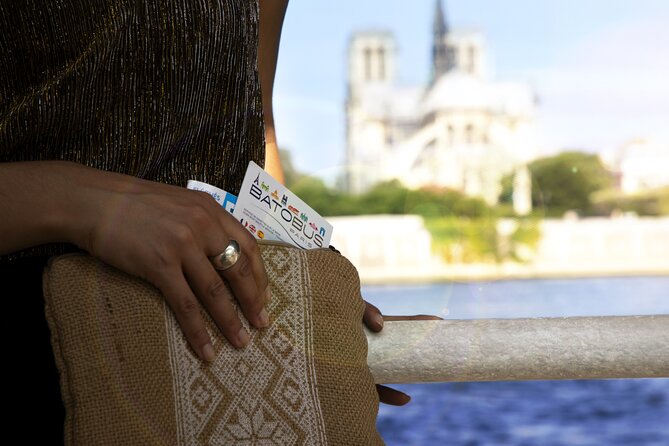
A full circuit takes a little over two hours. That makes it a pleasant overview ride, but it also means the Batobus is not always the fastest way to get from one point to another.
Check live departure times on the Batobus website before setting out. Operating hours have caused problems for some bookings, and the published schedule may not always match the service you expect. I would never use the boat as the only plan for a time-sensitive airport connection, dinner reservation, or timed museum entry.
The boats have deckhand staff, and the service is generally easy to use once you identify the dock. Still, boarding points can be poorly marked in places, particularly around Notre Dame. Give yourself time to locate the river access rather than arriving at the last minute.
Bag checks are now systematic. You must open jackets and coats at the entrance, and bulky luggage over 16 liters is not allowed. Small backpacks, handbags, and computer cases are excluded from that size restriction. Bicycle storage and a vending machine for drinks and snacks are available onboard, but there is no toilet.
Audio, seating, and the onboard experience
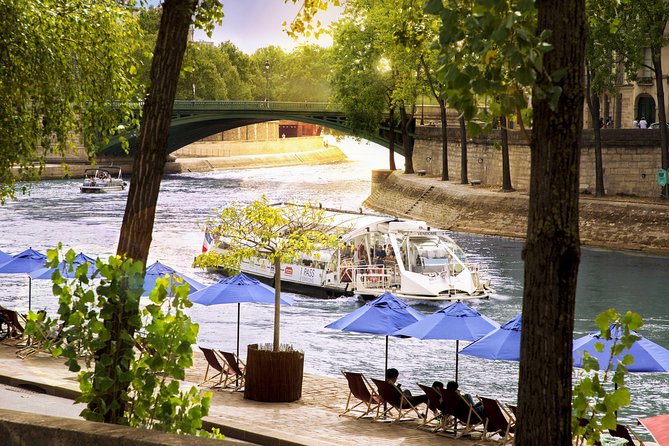
The Batobus is best understood as a comfortable river shuttle with sightseeing value. You get views of bridges, monuments, and riverfront buildings, but you do not get a guide explaining every detail in person.
The web app supplies commentary in English, French, Spanish, German, and Italian. Bring a charged phone and make sure you can access the app before boarding. Some people find the audio hard to understand, and others prefer to look at the city without commentary.
The rear terrace is the key seating area for photographs. It can be especially enjoyable in good weather, while indoor seating gives you shelter when conditions are less friendly. Boats are cleaned regularly, and staff are generally courteous.
Do not expect a restaurant, a full bar, or a plush cruise setting. The vending machine covers basic refreshments, but this is not a dinner cruise. Bring realistic expectations and you will likely find the experience more useful.
Who will get the most from Batobus
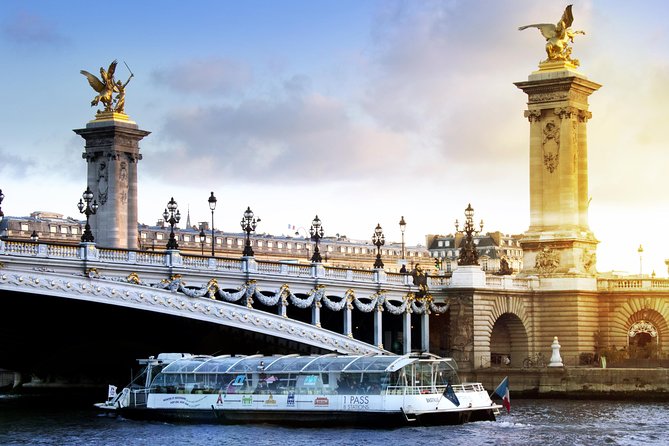
I would recommend this pass to you if you want a flexible way to connect the main central sights without spending the whole day underground or in traffic. It works particularly well for first visits, relaxed sightseeing, families who need regular pauses, and anyone staying close to one of the river stops.
It is also a smart choice after an overnight flight. Sitting on the Seine for a while can help you get your bearings without demanding much energy. The route gives you a visual sense of Paris before you tackle its museums and neighborhoods.
I would be more cautious if you have a tightly packed schedule. The boat may be slower than the Metro, and getting down to the river and back up to street level adds time. The steps can also be a concern for anyone with mobility limitations.
The service is less suitable if you want a formal guided tour. Choose it for movement and views, not for a detailed lecture about Paris. You should also think twice if you plan to carry a large suitcase.
Cancellation and booking details
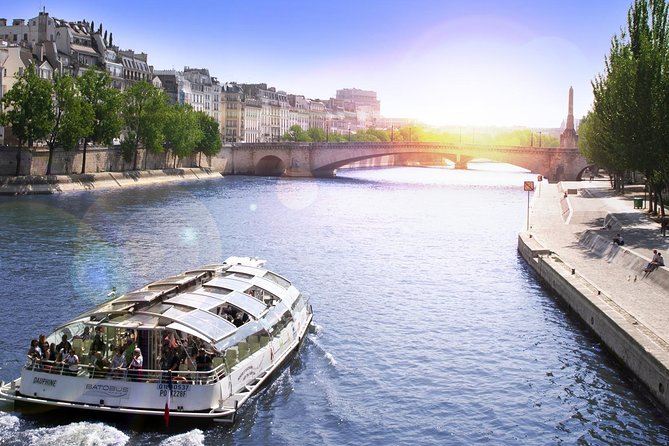
You can cancel for a full refund up to 24 hours before the experience begins. Changes or cancellations made inside that 24-hour window are not accepted for a refund.
The experience depends on good weather. If poor weather causes cancellation, you are offered another date or a full refund. Since operating hours can change, check the current schedule before leaving your hotel, even after booking.
Should you book the Batobus?
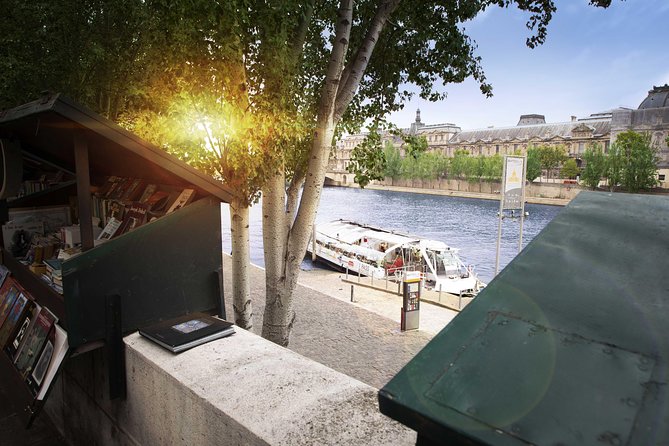
I would book it if you want to combine sightseeing with practical transport and can use the boat at an easy pace. The strongest value comes from a 48-hour pass, several rides, and stops at major sights such as the Eiffel Tower, Musée d’Orsay, Notre Dame, and the Louvre.
I would skip it if you only need one short transfer, expect a fully guided cruise, or have strict appointment times all day. Used as a river-based hop-on hop-off pass, it offers a pleasant and flexible way to experience central Paris. Used as a fast city bus, it may test your patience.
FAQ
How long does the full Batobus route take?
The full circle takes approximately two hours, though the exact time can vary with operating conditions and departures.
How long is the Batobus ticket valid?
You can choose a pass valid for 24 or 48 consecutive hours.
Can I hop on and off as often as I want?
Yes. The pass includes unlimited hop-on hop-off rides during its 24 or 48-hour validity period.
How many Batobus stops are there?
The route includes nine stops along the Seine, including the Eiffel Tower, Musée d’Orsay, Notre Dame, the Louvre, Hôtel de Ville, and the Champs-Élysées area.
Is audio commentary included?
Yes. Multilingual commentary is available through the Batobus web app in English, French, Spanish, German, and Italian.
Is there a guide speaking on the boat?
The service includes deckhand staff, but it is not described as a guided tour with a live guide explaining the sights throughout the ride.
Is there a toilet onboard?
No. There are no toilets on the boat, so plan to use facilities during your stops.
Can I bring large luggage?
No. Bulky luggage larger than 16 liters is not allowed. Small backpacks, handbags, and computer cases are not included in that restriction.
Are pets or service animals allowed?
Service animals are allowed.
What happens if bad weather cancels the cruise?
You can choose another date or receive a full refund if the experience is canceled because of poor weather.
More Sightseeing Cruises in Paris
- Paris: Seine River Sightseeing Cruise by Bateaux Mouches
★ 4.4 · 4,461 reviews
More Sightseeing Cruises in France
- Paris: Big Bus Hop-On Hop-Off Tour with Optional Cruise
★ 4.4 · 13,279 reviews - Bateaux Parisiens Seine River Gourmet Dinner & Sightseeing Cruise
★ 4.5 · 6,930 reviews - Paris Big Bus Hop-On Hop-Off Tour with Optional River Cruise
★ 4.0 · 6,534 reviews - Paris: Hop-On Hop-Off Seine Cruise Pass with 9 Stops
★ 4.4 · 5,645 reviews
Just added on the water around Paris
- Paris: Eiffel Tower Hosted Tour, Seine Cruise and City Tour★ 4.0 · 1,507 reviews
- Paris: Eiffel Tower Access w/ Audioguide and Optional Cruise★ 4.0 · 1,630 reviews
- From Paris: Day Trip to Bruges with Optional Seasonal Cruise★ 4.4 · 1,034 reviews
- Paris: Catacombs Ticket and Seine River Cruise★ 4.1 · 853 reviews
- Paris: 4-Course Dinner Cruise on Seine River with Live Music★ 4.5 · 3,827 reviews
- Paris: Day or Sunset Cruise with Drink, Ice Cream or Dessert★ 4.4 · 4,225 reviews
- Paris: Seine River Sightseeing Cruise by Bateaux Mouches★ 4.4 · 4,461 reviews
- Bateaux Mouches Dinner Cruise on the Seine River in Paris★ 4.5 · 4,847 reviews
Sightseeing Cruises, side by side.

Budapest: City Highlights Sightseeing Cruise
Read our review →
Prague: 50-Minute Sightseeing Evening Cruise
Read our review →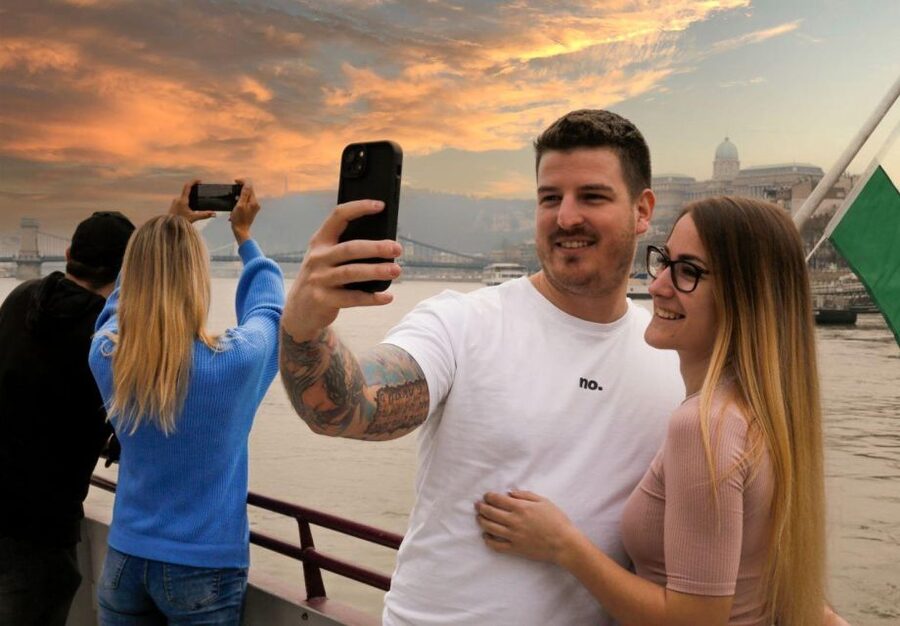
Budapest: Nighttime or Daytime Sightseeing Cruise
Read our review →
Budapest: By Night Sightseeing Cruise with Welcome Drink
Read our review →
Istanbul: Daytime or Sunset Sightseeing Cruise & Audio Guide
Read our review →
Stockholm: City Archipelago Sightseeing Cruise with Guide
Read our review →
Seville: 1-Hour Guadalquivir River Sightseeing Eco Cruise
Read our review →